


Trip Advisor
-
 An experience worth having - An experience that should not be missed is how I would describe what I felt. The way the team makes you feel at home, very aware of how each member... read more

 Ramesh V
October 19, 2026


Namdapha National Park Trek, Arunachal + Hornbill Festival
Namdapha National Park Trek, Arunachal + Hornbill Festival

Description
Upcoming Group Trips: – 28th Nov to 6th Dec 2026
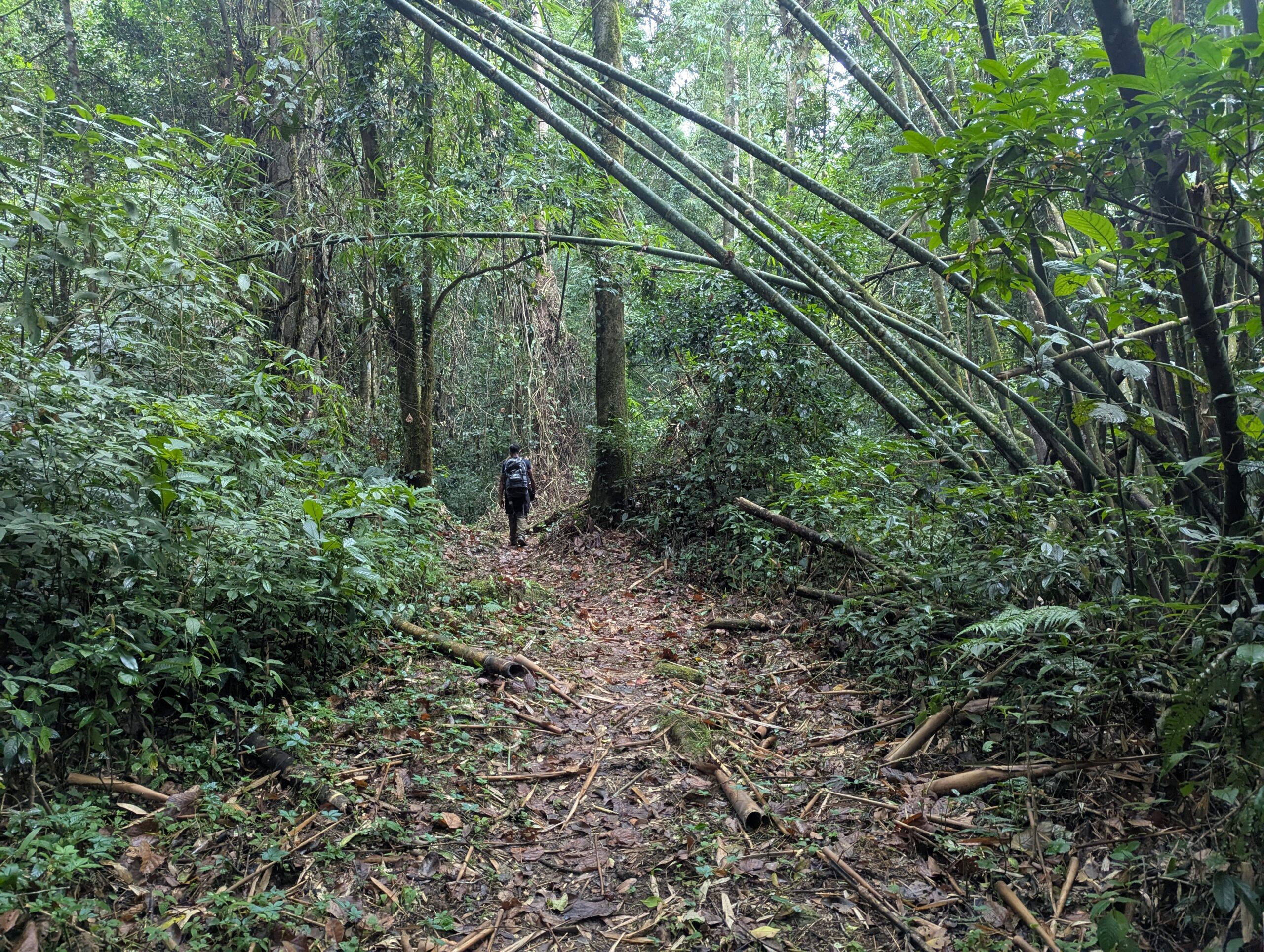
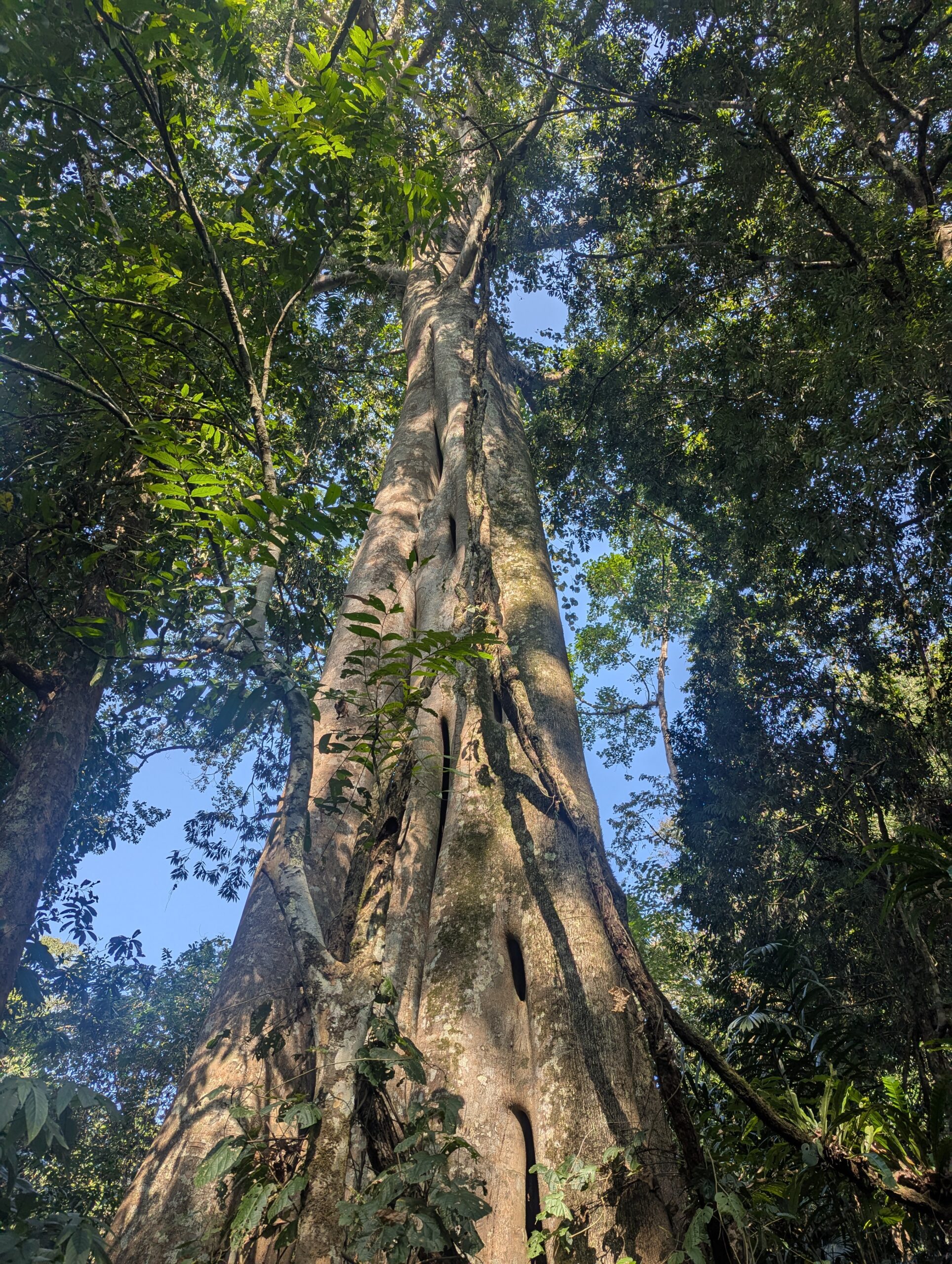
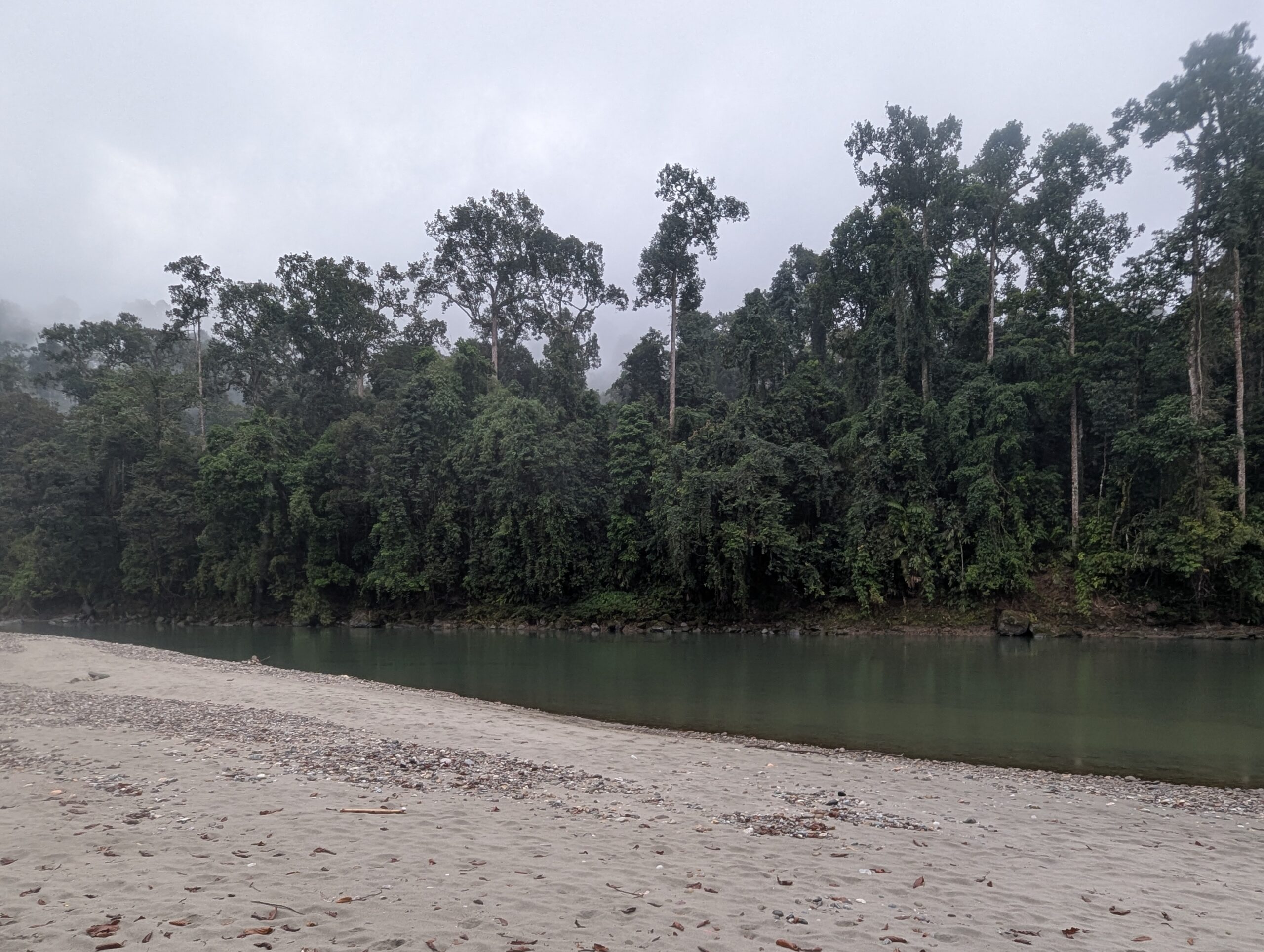
Tucked away in the northeast corner of the easternmost state is India’s own Amazon – Namdapha National Park! Interestingly, it happens to be the northernmost tropical rainforest in the world. What sets apart Namdapha is the diversity in the ecosystems, thanks to an altitude range of 200 to 4571 metres at Dapha Bum peak. Here, you will find both dense evergreen jungles – where trees seem to hug the sky – alpine meadows and gushing rivers. With 1000-plus plant species, 500-plus bird species and nearly 100 mammals recorded here, Namdapha ranks among the most bio-diverse protected areas of the world. This pristine wilderness is home to all four big cats – tiger, leopard, clouded leopard, and the elusive snow leopard.
Trekking through this bio-diverse paradise is an unmissable experience for both adventure seekers and wildlife enthusiasts. What’s more, a visit to Chakma and Lisu tribal settlements inside the sanctuary adds a cultural flavour to the journey.
The Namdapha trek has a very short season, being accessible only from end-Nov to mid-February. These winter months also coincide with vibrant winter festivals that showcase the rich culture of Northeast India’s many tribes, featuring traditional handicrafts, music, dance, and cuisine. To make the experience even more special, our trips include a stop at festivals such as the Hornbill Festival or the Pangsau Pass Festival, allowing guests to immerse themselves in both nature and culture.
Itinerary
- Day 1Your city - Dibrugarh | 150 km drive to Miao, 4 hours
- Day 2Drive from Miao to Deban Forest Rest House (25 km, 2 hours) | Trek to Chakma and Lama Villages and back - 5 km, 3 hours
- Day 3Deban to Hornbill Camp - 10 km hike, 5 to 6 hours
- Day 4Hornbill Camp to Firmbase Camp - 11.5 km hike, 6 hours
- Day 5Firmbase to Imbiong - 4.5 km hike, 2 hours | 8 km hike to Lisu settlement and back, 4 to 5 hours
- Day 637th Mile to Ledo - 110 km drive, 5 hours | Ledo to Dimapur by train, 8 hours
- Day 7 Dimapur - Jakhama: 88 km - 2.5 hour drive | Hornbill Festival
- Day 8Angami Village Heritage Tour (Khonoma) with Streamside Picnic in Dzuleke Valley
- Day 9Jakhama to Dimapur - 2.5 hour drive | Flight back to your city
Inclusions
- 5 nights in comfortable resorts/hotels/forest rest house, and 3 nights in camps
- All meals starting with dinner on Day 1 to breakfast on lunch on Day 6
Breakfast and dinner on Day 7
Breakfast, picnic lunch and dinner on Day 8
Breakfast on Day 9 - Ground transfers – starting with pick-up at Dibrugarh airport, Scorpio or equivalent for the Arunachal leg of the trip. Tempo Traveler for Nagaland leg of the trip (Dimapur railway on Day 6 station to Dimapur airport on Day 9)
- 2nd AC train tickets – Ledo to Dimapur
- Trekking permits and Inner Line Permits for Arunachal (please note: you have to apply for the Nagaland ILP on your own)
- Porterage – one bag weighing not more than 12 kgs – Deban Forest Camp to Imbiong
- Trekking guides and naturalists for the Namdapha trek
- Guided tour of Khonoma village, Nagaland
- Entry tickets to the Hornbill festival
Gallery
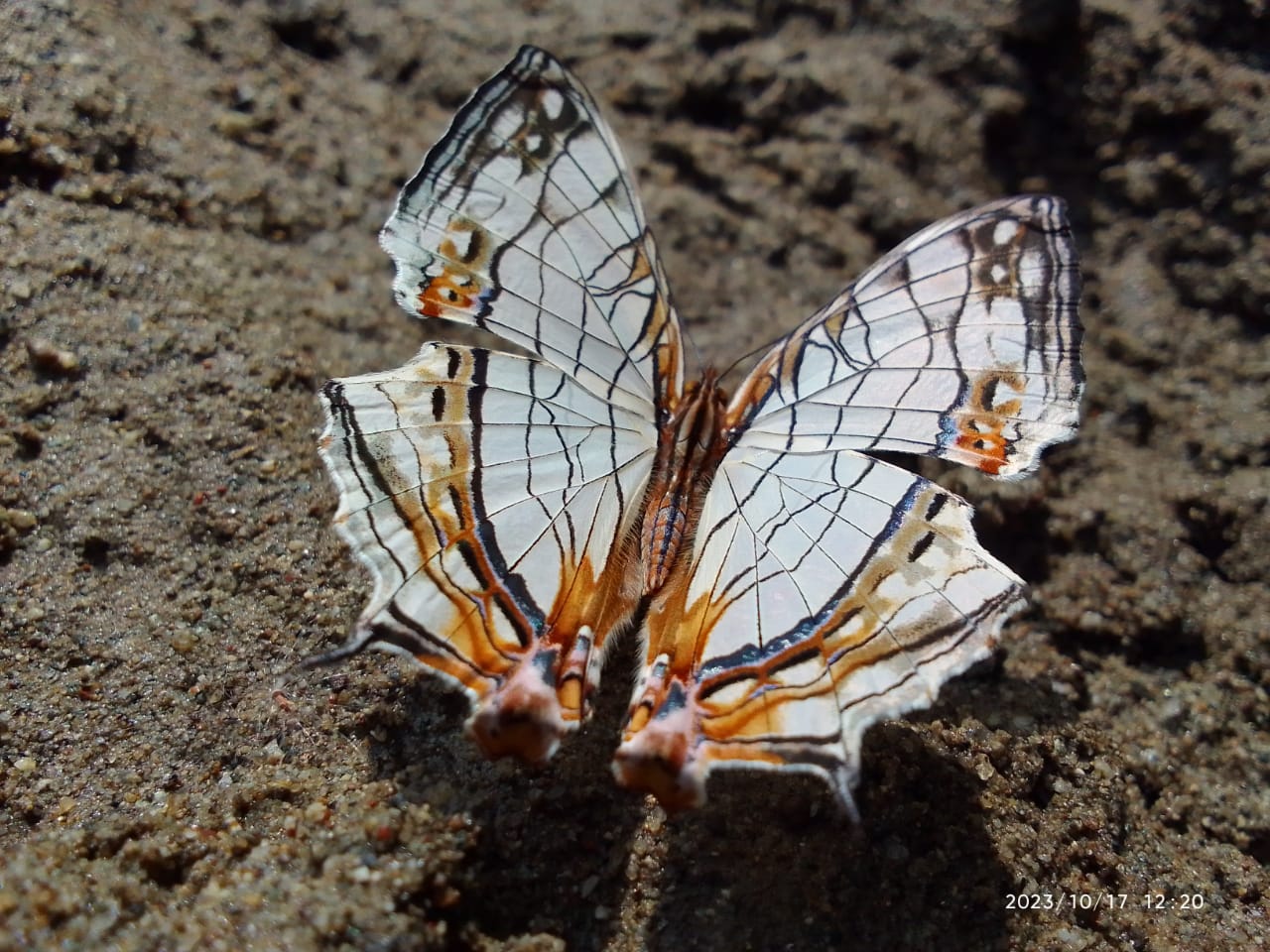
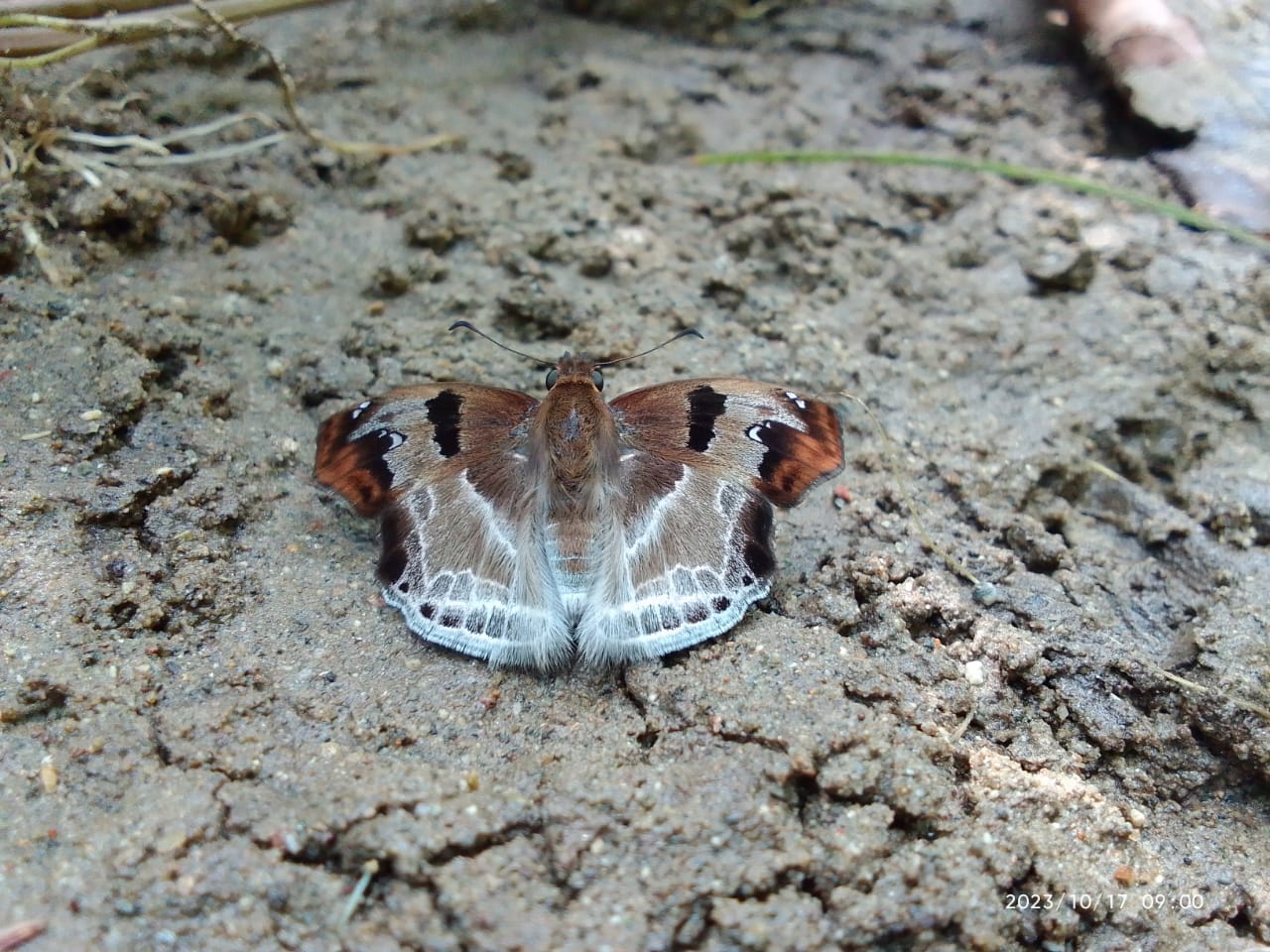
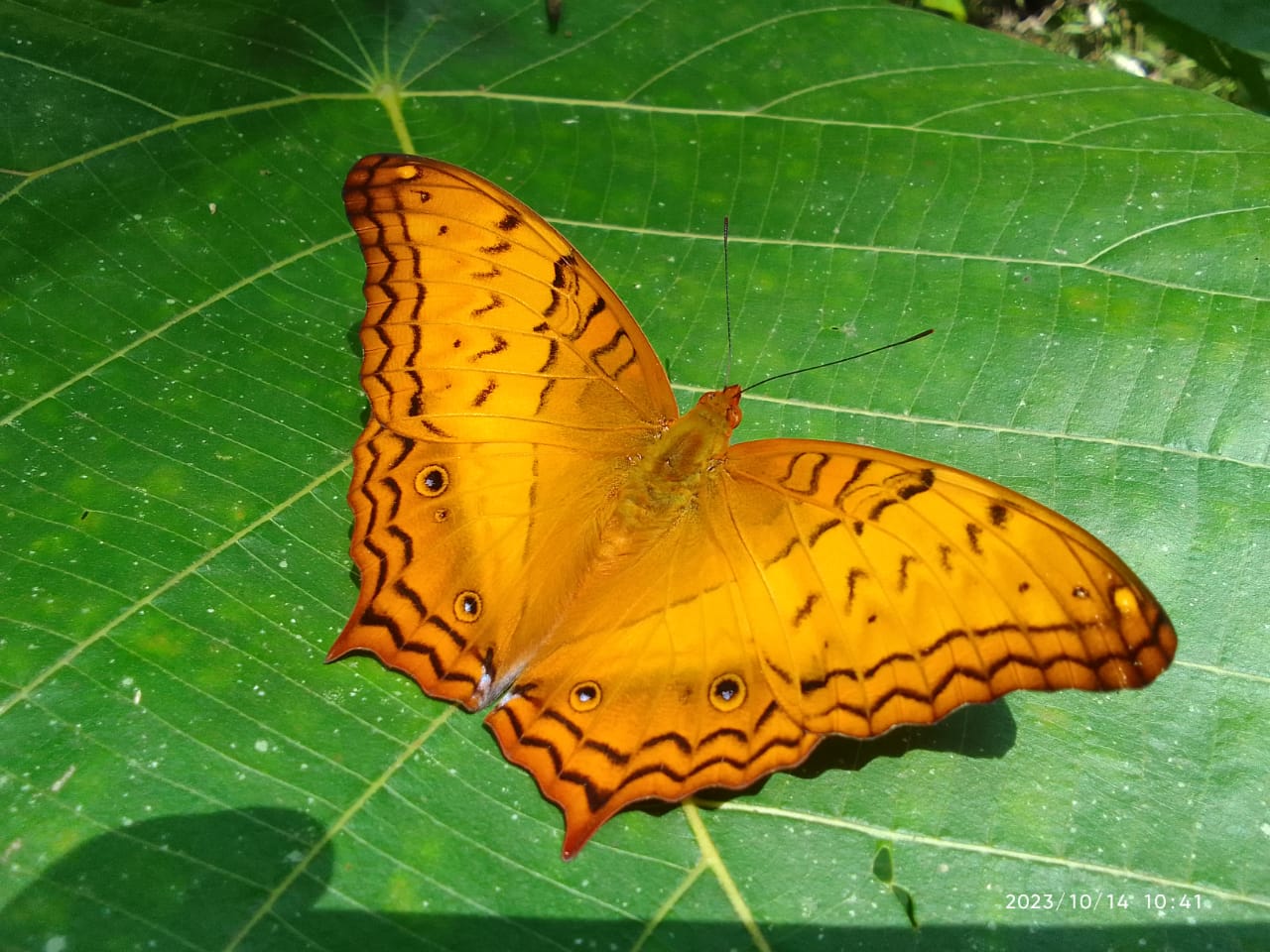
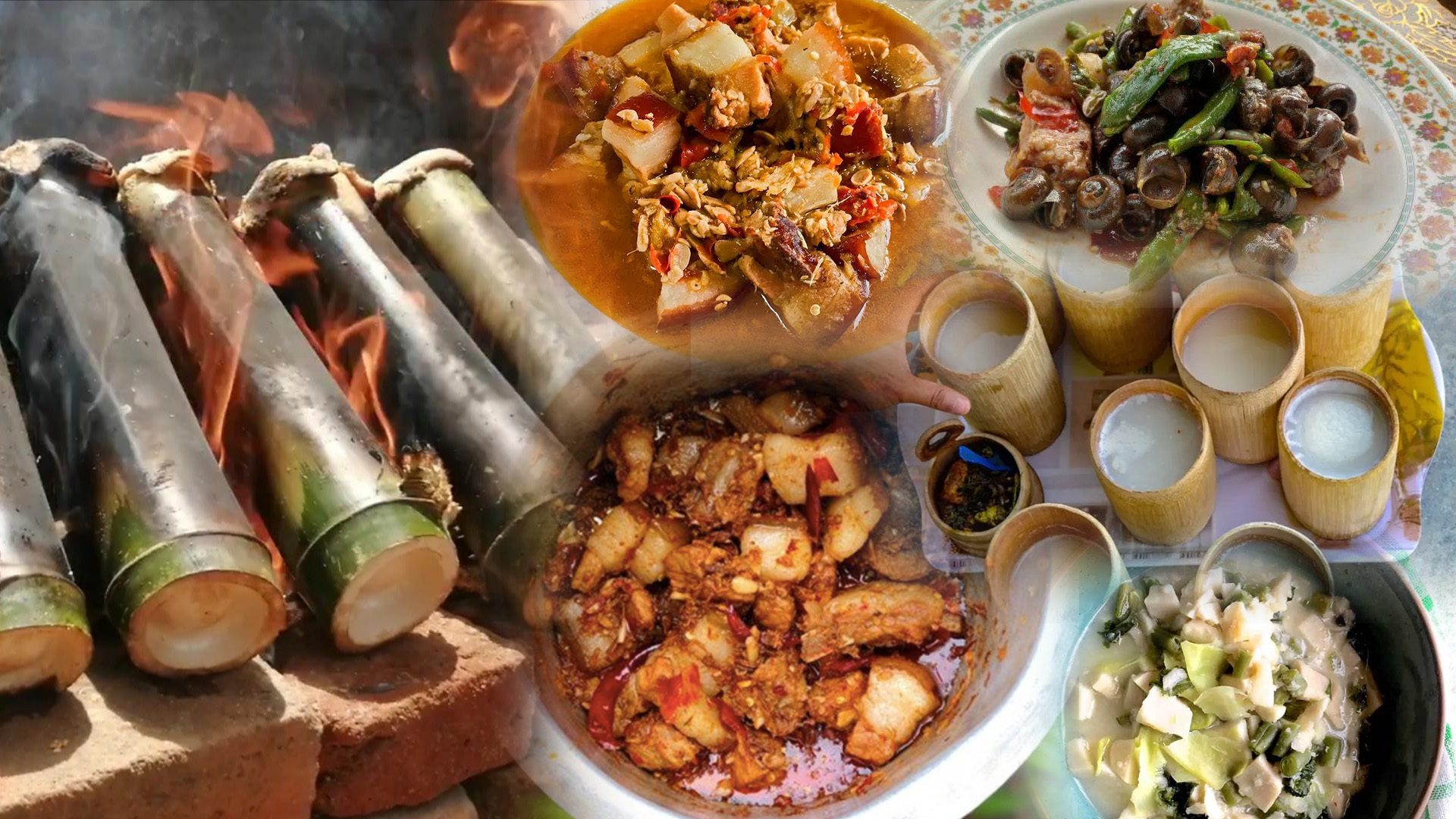
FAQ
What is the Namdapha National Park trek with the Hornbill Festival?
It is a 9-day, 8-night journey that combines a forest trek in Namdapha National Park, Arunachal Pradesh, with the Hornbill Festival in Kisama, Nagaland. You walk about 35 km through tropical rainforest, camp beside rivers, visit Chakma and Lisu settlements, then travel to Nagaland for the festival and a heritage tour of Khonoma village.
Why is Namdapha called India’s Amazon?
Namdapha is the northernmost tropical rainforest in the world, and it spans an altitude range from about 200 m to 4,571 m at Dapha Bum peak. That range packs evergreen jungle, bamboo groves, rivers and alpine meadows into one park. More than 1,000 plant species, over 500 bird species and nearly 100 mammals have been recorded here.
What wildlife can I expect to see on the Namdapha trek?
Namdapha is home to all four big cats (tiger, leopard, clouded leopard and snow leopard), but sightings of them are very rare and shouldn’t be expected. The more realistic highlights are birds, including hornbills, the calls of Hoolock gibbons from the canopy near Hornbill Camp, and flying squirrels gliding between trees at night. Our trek guides are also trained naturalists who help you spot and identify what’s around you.
Is the Namdapha trek good for birdwatching?
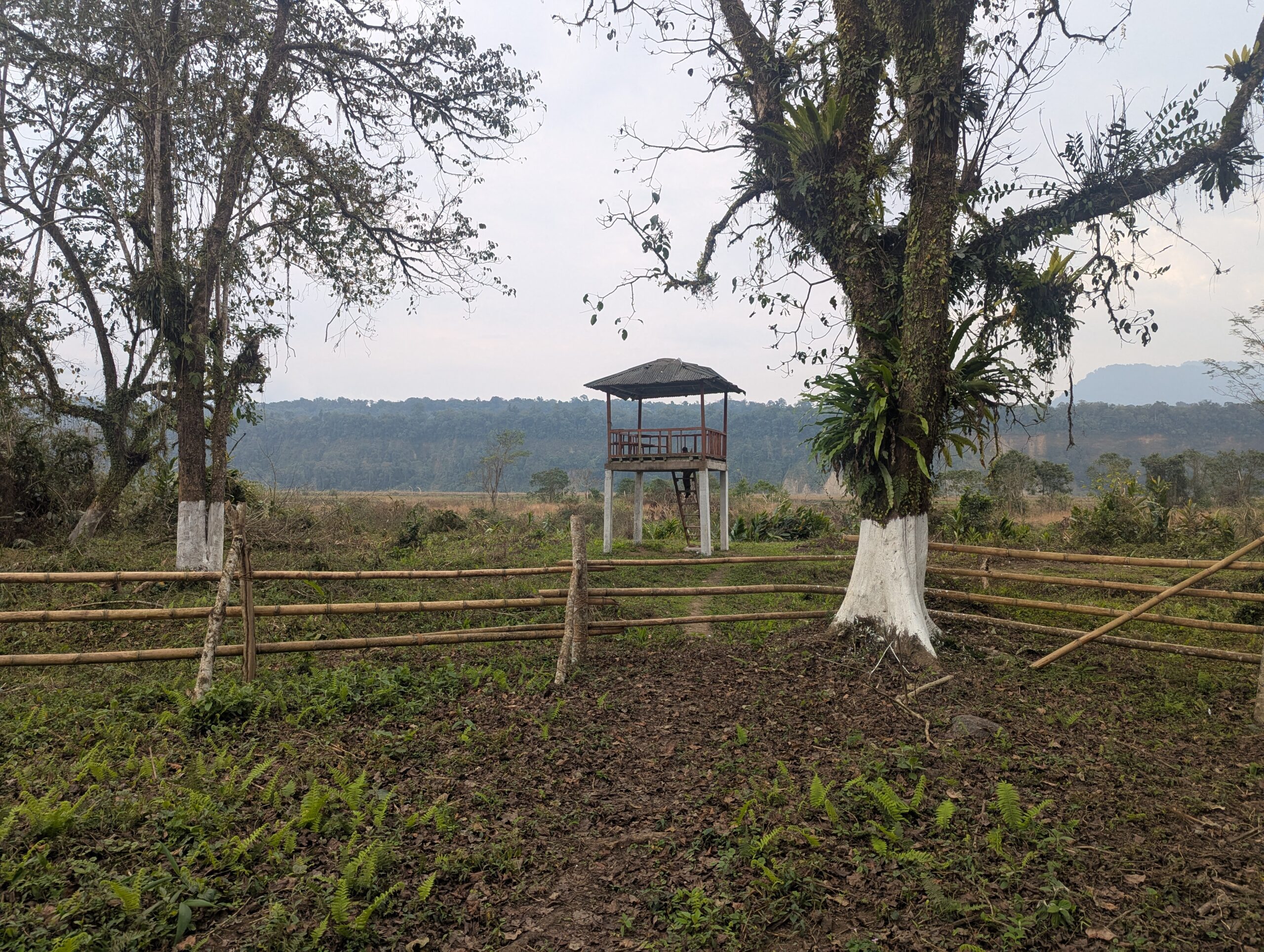
Yes. With over 500 recorded bird species, Namdapha is one of India’s richest birding areas. Hornbill Camp is a good spot for birding, and the watchtower at Firmbase overlooks the river for evening birdwatching. Bring binoculars if you have them.
How difficult is the Namdapha trek?
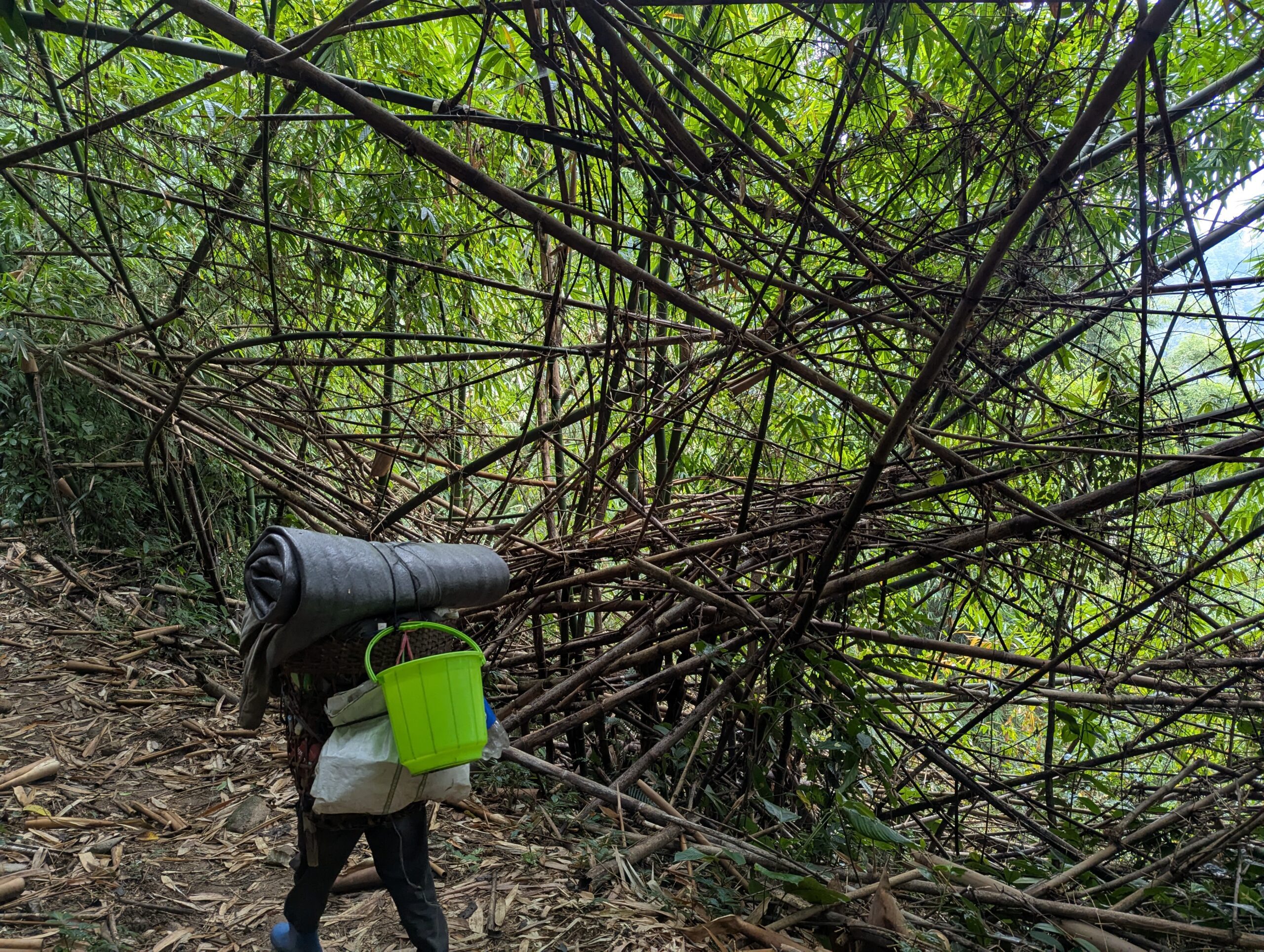
It is a moderate forest trek with one demanding day. Most days are 4 to 6 hours of walking on gradual forest trails, and Day 4, from Hornbill Camp to Firmbase (11.5 km, about 6 hours), is the hardest, with a descent of nearly 500 m through bamboo groves where fallen leaves make the path slippery. The trek’s maximum altitude is only 800 m, so altitude sickness is not a concern here.
What fitness level do I need?
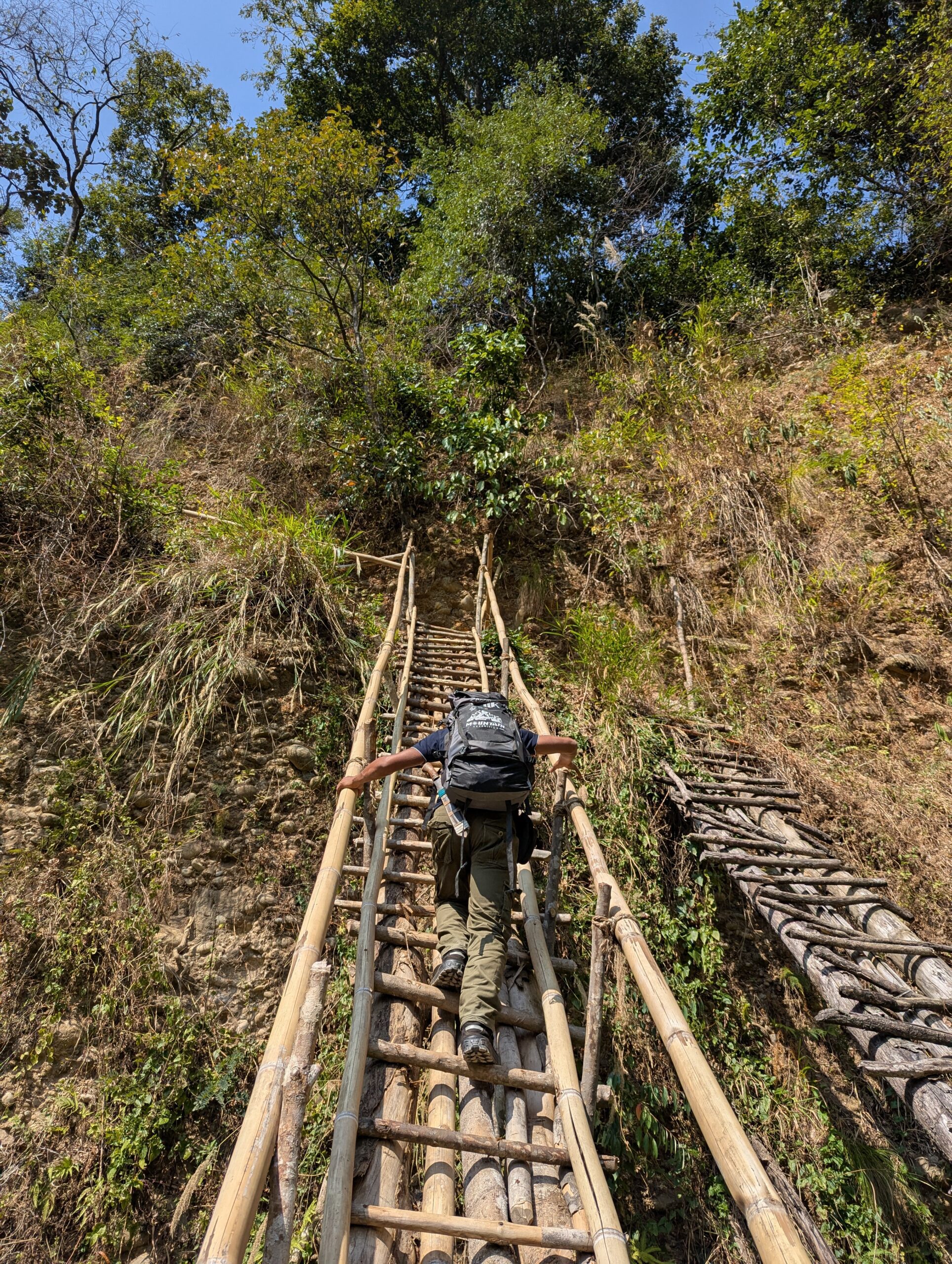
You should be comfortable walking for 5 to 6 hours a day, with a light daypack, on uneven forest paths and over a few bamboo bridges. Regular brisk walking or hiking for a few weeks before the trip is good preparation. If you have any doubts, call us on +91-82799-29473 and we’ll tell you honestly whether the trek suits you.
Is the Namdapha trek suitable for beginners, children or older travellers?
Beginners and older travellers with decent walking stamina can do it, since the trails are gradual rather than steep and the maximum altitude is low. The recommended minimum age is 10 but if your child is physically active and used to walking long distances, they may manage even if younger, but adequate preparation is necessary. As camps are remote and the longest days are 6 hours, we suggest reaching out with the age and fitness level of everyone in your group, and we’ll advise before you book.
Is it safe to trek in Namdapha with wild animals around?
Yes, when you trek with experienced guides and stay on the trail. Your guides and naturalists are with you throughout, and camps are set up in established clearings and riverside sites. Our guides are qualified in first-aid and we carry a kit and an emergency evacuation plan. Travel insurance is recommended.
When is the best time for the Namdapha trek?
The best time is from the end of November to mid-February, and the trek is only possible in this short winter season. These months are dry and cool, and they also overlap with the winter festivals of Northeast India.
What is the weather like during the trek?
Expect pleasant winter weather in Namdapha, with daytime highs of about 21 to 23°C and night lows of about 8 to 10°C. Kohima and the Nagaland hills will be colder, with highs of around 18°C and lows around 4°C.
When is the Hornbill Festival and where is it held?
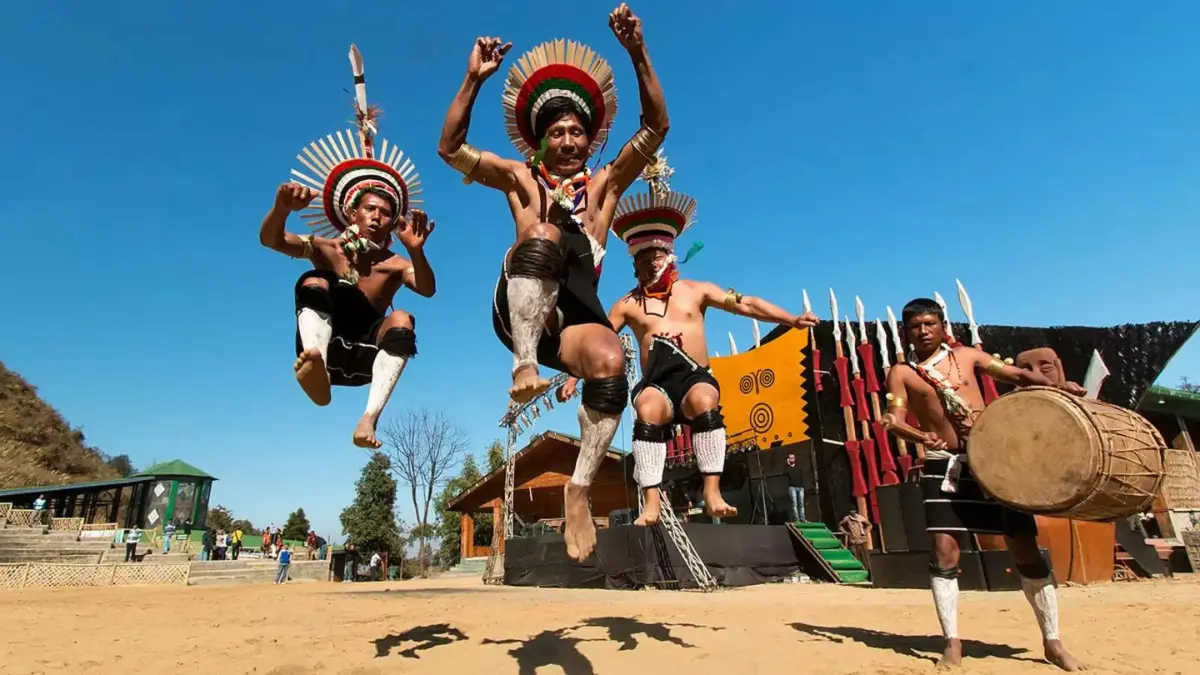
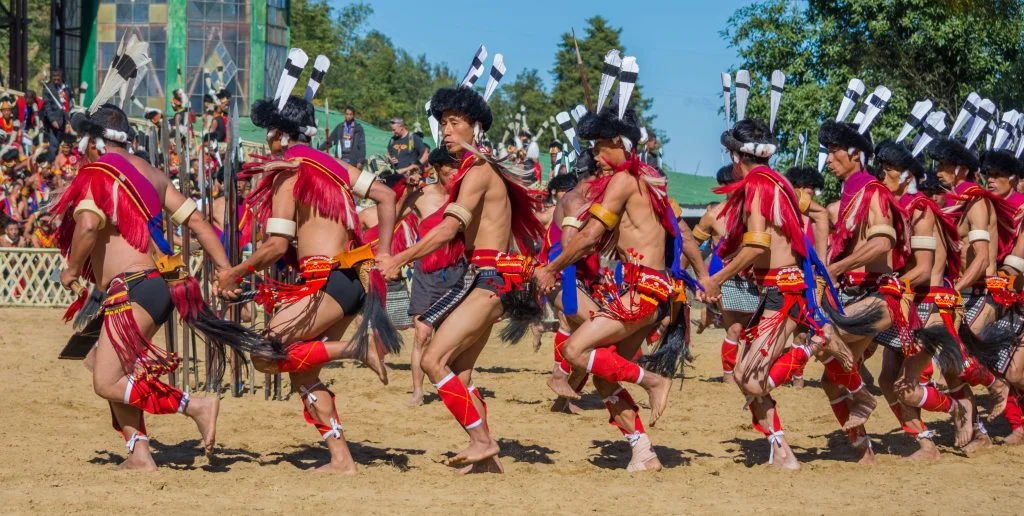
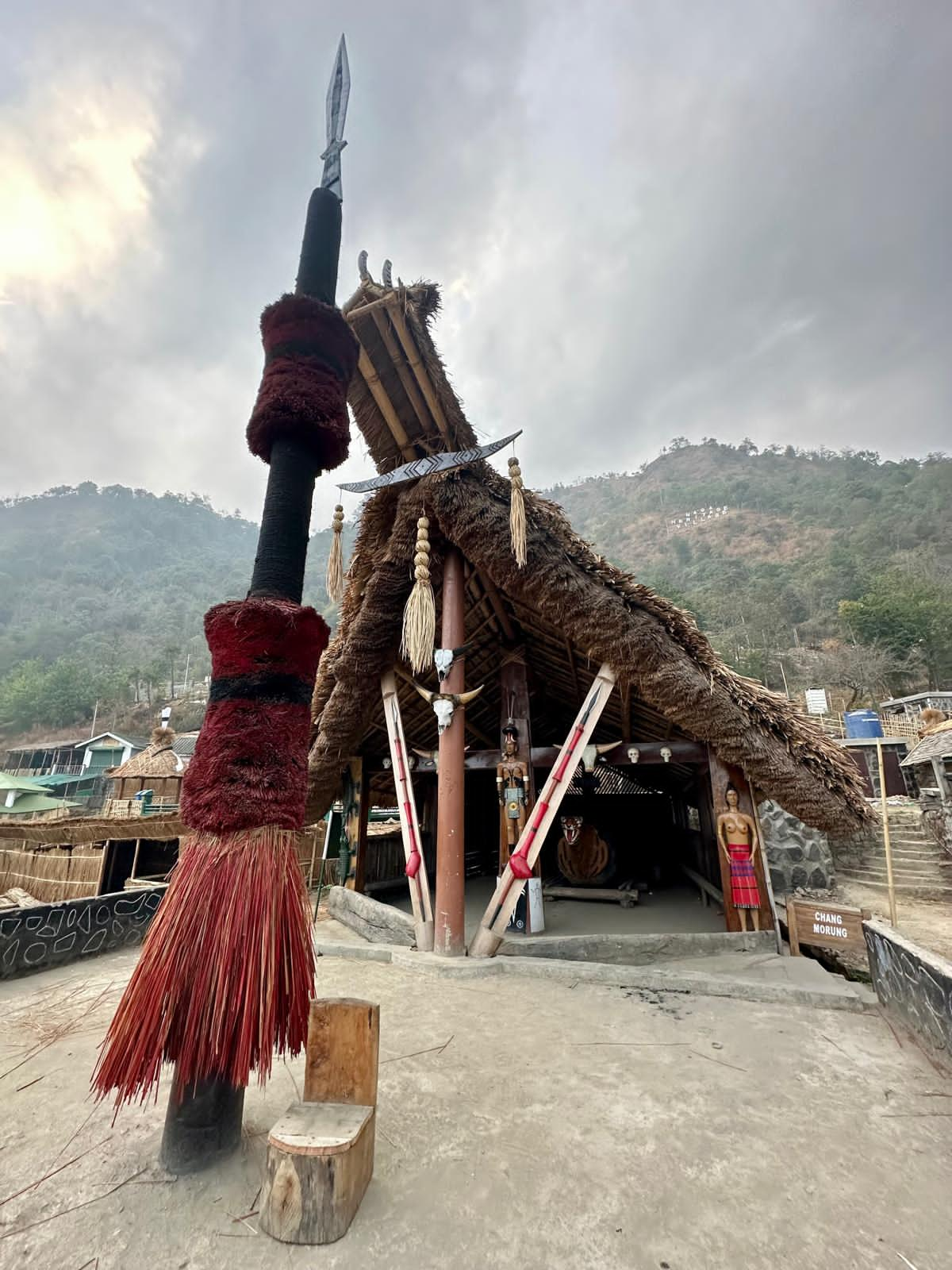
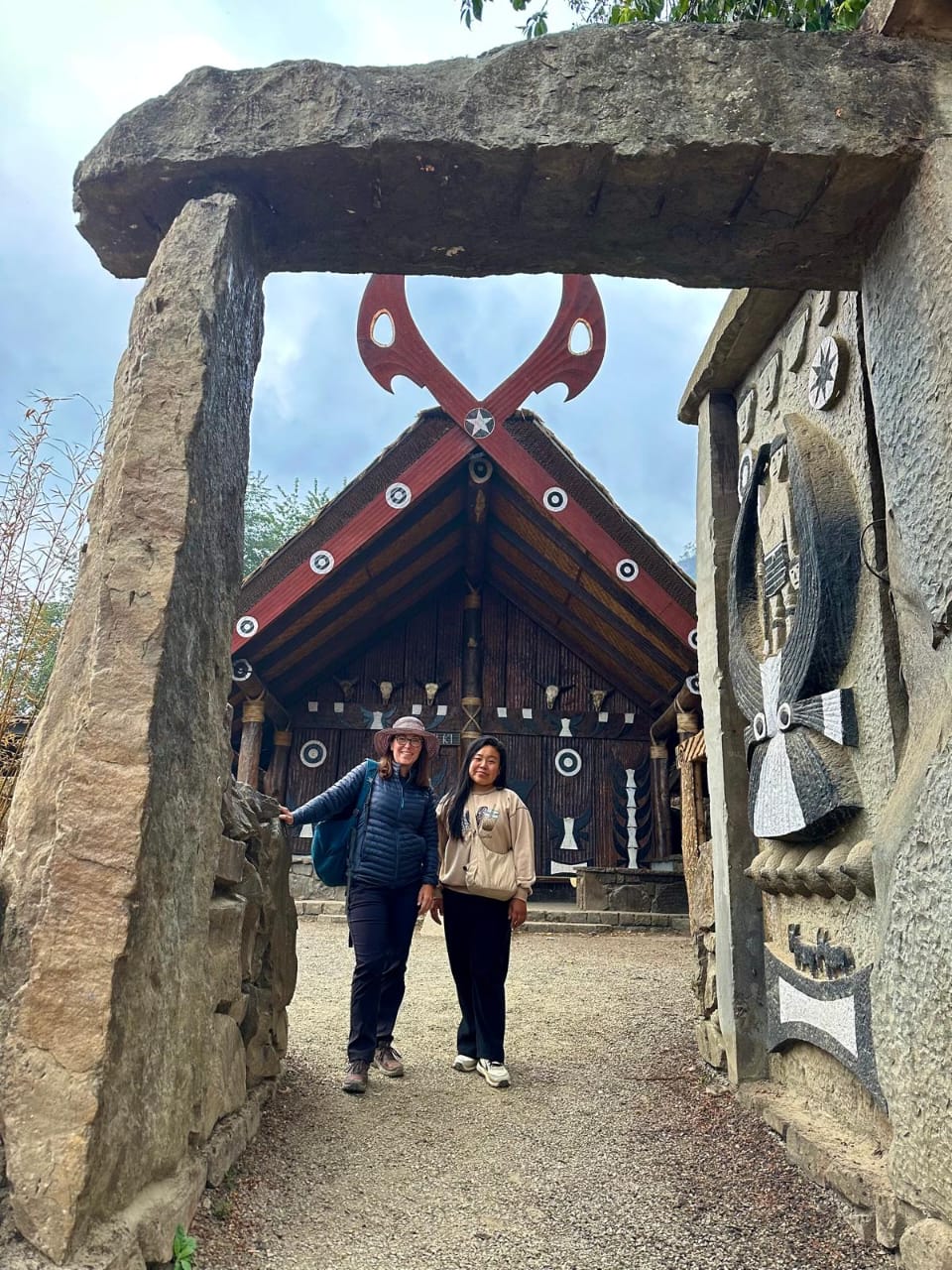
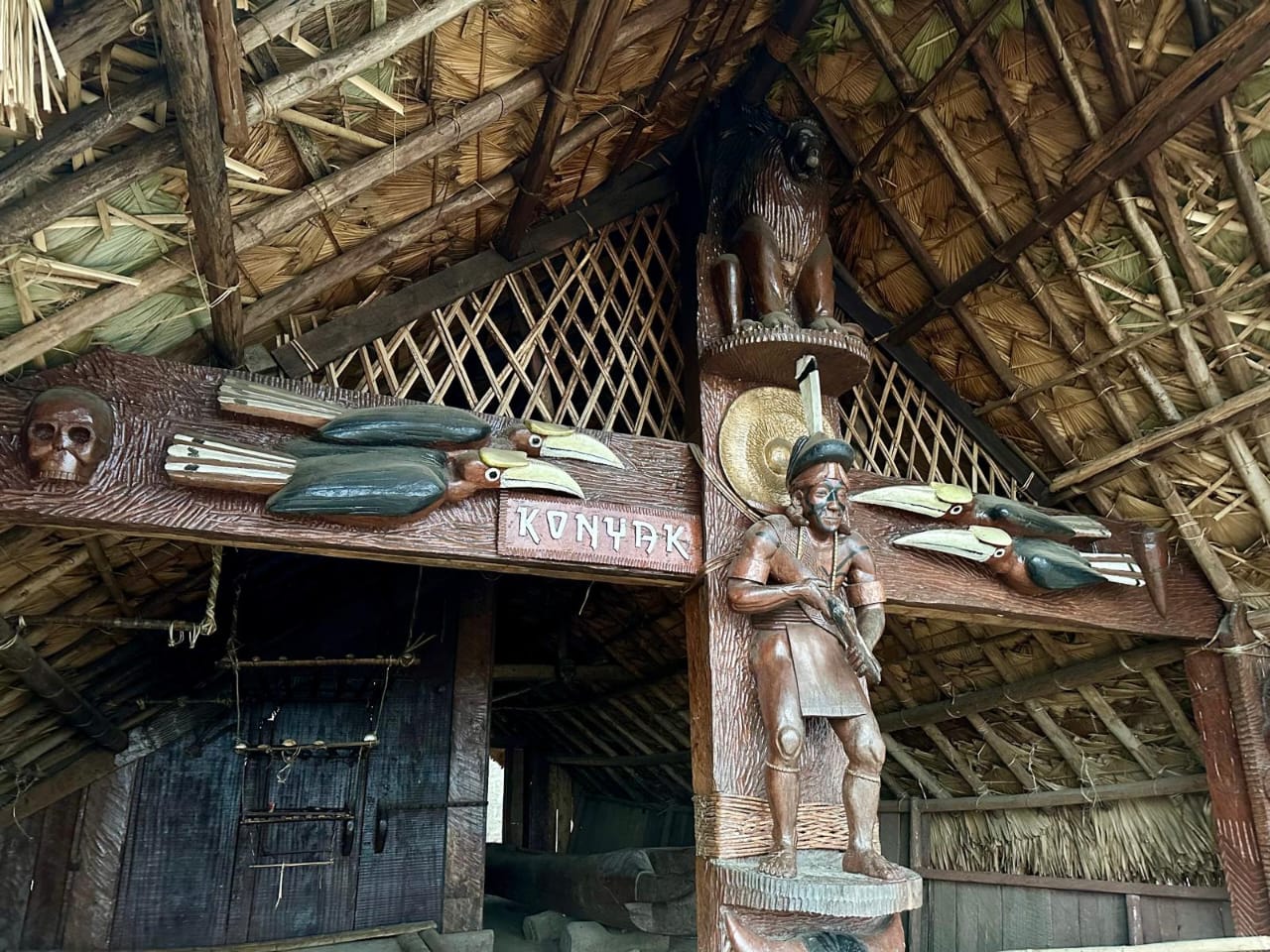
The Hornbill Festival is held every year in the first ten days of December at Kisama village near Kohima, Nagaland. Our trip is timed so that you reach the festival on Day 7, after finishing the Namdapha trek. It features traditional tribal morungs, dances, indigenous games, Naga food, handicrafts and evening concerts.
Do I need a permit for entering Arunachal and Nagaland?
All tourists must have an ILP (Inner Line Permit) for entering Arunachal and Nagaland (separate one for each state). Arunachal ILP is included in our package but you are required to apply for a Nagaland ILP online yourselves.
Why isn't Nagaland ILP included in your package?
The ILP application process is an online process that requires the tourist’s ‘live photo’ and therefore we are unable to apply on you behalf.
Is it safe to travel to Nagaland?
Yes, Nagaland is generally safe for travellers, particularly in the areas covered by our journeys, such as Kohima, Jakhama and Kisama and Dzouku which are well-established tourist destinations.
Nagaland is a peaceful and welcoming state, and visitors regularly travel through these areas without any issues. Having said that, some remote parts of the state have experienced insurgency-related activity in the past, and the security situation can vary from one region to another. We therefore plan our itineraries carefully and avoid areas where there may be security concerns.
Can foreign nationals do this trek?
Yes. In addition to the ILP, foreign nationals need a Protected Area Permit (PAP), which can be applied for online. You arrange your own Indian visa. Contact us before booking and we’ll help with the permit steps.
Where will we stay during the Namdapha trek?
You stay in comfortable resorts and guesthouses for 5 nights and in camps for 3 nights. The first night is in a resort in Miao, then the Forest Rest House at Deban, three nights in tents at Hornbill Camp, Firmbase and Imbiong, a hotel in Dimapur, and two nights in a quaint resort near Kisama village in Jakhama.
Will there be proper toilets during the trek?
Toilet tents will be set up in campsites in Namdapha. All the other accommodations have modern attached toilet/bathrooms.
Can I take a bath during the trek?
No. Bathing is not possible during the trek through Namdapha, so pack wet wipes and a change of clothes. Hot water is available at the stays outside the forest.
Is there electricity or mobile network in Namdapha?
No. None of the campsites inside Namdapha have electricity, and Deban, Hornbill Camp, Firmbase and Imbiong have no mobile or broadband connectivity. Carry headlamps and fully charged power banks, and tell family to expect no contact for several days.
Is the drinking water safe on the trail?
Filtered water is provided during the trek. You can also carry a personal purifier (Zero-B and LifeStraw are popular brands) or water purification tablets.
What temperatures can we expect during the winter months?
What is the weather like during the trek? Expect pleasant winter weather in Namdapha, with daytime highs of about 21 to 23°C and night lows of about 8 to 10°C.
Kohima and the Nagaland hills will be colder, with highs of around 18°C and lows around 4°C.
Do I have to carry my own luggage on the trek?
No. You carry only a small backpack with water, snacks and personal medicines, while porters move your main bag between camps. Porterage covers one bag of up to 12 kg from Deban Forest Camp to Imbiong.
How much does the Namdapha trek cost and what is included?
Please check the latest price on the trip page, since it can change by departure. The package includes accommodation in resorts, guesthouses and camps, the meals listed on the itinerary, ground transfers from Dibrugarh airport, 2nd AC train tickets from Ledo to Dimapur, trekking permits and the Arunachal ILP, porterage, and trekking guides and naturalists. The maximum group size is 9.
How do I reach the start and end points of the trip?
The trip starts at Dibrugarh airport in Assam, where you should arrive by 2 pm on Day 1 to meet our driver. It ends at 10.30 am at Dimapur airport in Nagaland. So, book your flights into Dibrugarh and out of Dimapur accordingly
What should I pack for the Namdapha trek?
Pack sturdy trekking shoes with good grip, quick-dry layers for warm days and cold nights, a rain jacket, a warm layer for camp, a headlamp, a power bank, sun protection, binoculars, and your personal medicines. Add a water purifier or tablets if you like, and carry the Nagaland ILP printout and a photo ID.
What is the cancellation and refund policy?
Ask our team before you book, as the policy varies for each trip
What can I add to the end of the trip?
Many guests extend their time in Nagaland. We can arrange the Dzükou Valley trek, and excursions to Zhavame, Pfutsero, Mokokchung and Longwa, the village known as the land of the last headhunters. Call +91-82799-29473 or write to hello@outdoers.in and we’ll plan it with you.