






Somewhere between the roar of Dhaulagiri and the hush of a hillside village, there is a trail that most trekkers walk straight past.
Mohare Danda sits just off the well-worn Ghorepani–Poon Hill route, and yet it belongs to a different, slower world — one of eco-community lodges, birdsong-filled forest paths, and villages that still run on the rhythms of the Magar and Tamang communities who call them home. This is the trail Outdoers takes trekkers on when they want the Annapurna views without the Annapurna traffic.
Stone steps, steaming dal bhat, and the last teahouse before the climb
The trail proper begins at Banthanti, a village that lies a bit beyond Ulleri, best known to trekkers for the thousands of stone steps that lead up from Tikhedhunga. By the time the legs start complaining, the teahouses appear — strings of prayer flags, woodsmoke, and the promise of a hot meal before the real climb to Poon Hill begins the next morning.
It’s an easy place to fall into the rhythm of the trek: slow mornings, unhurried conversations with fellow trekkers over milk tea, and an early bedtime dictated by an alarm set well before sunrise.

Teahouses along the trail from Ulleri, the last stop before the pre-dawn climb
“There is a particular kind of silence at 5am on a mountain trail — broken only by breath, boots, and the occasional gasp when the ridge finally opens up.”
On the climb to Poon Hill
The classic sunrise, earned the old-fashioned way
Poon Hill needs no introduction to anyone who has read a single trekking blog about Nepal — and for good reason. The pre-dawn climb rewards trekkers with an uninterrupted sweep of the Annapurna and Dhaulagiri ranges, the peaks catching the first light long before the valleys below do.
It’s crowded, yes. But standing on that ridge as Annapurna South and Machhapuchhre turn gold is one of those travel moments that lives up to every photograph you’ve seen of it.

Layers of ridgeline unfolding below Poon Hill at first light

Leaving the crowds behind: rhododendrons lining the ridge trail from Poon Hill toward Mohare Danda. Photo credits: Bharat Kumar
Where the trail empties out and the forest takes over
This is where Mohare Danda earns its reputation as Poon Hill’s quieter sibling. The ridge trail connecting the two winds through dense rhododendron forest — a tunnel of deep red and pink blooms if you catch it in spring, and a cool, green corridor the rest of the year.
Within an hour of leaving Poon Hill, the crowds thin to almost nothing. It’s just the trail, the trees, and the occasional distant chime of a yak bell.

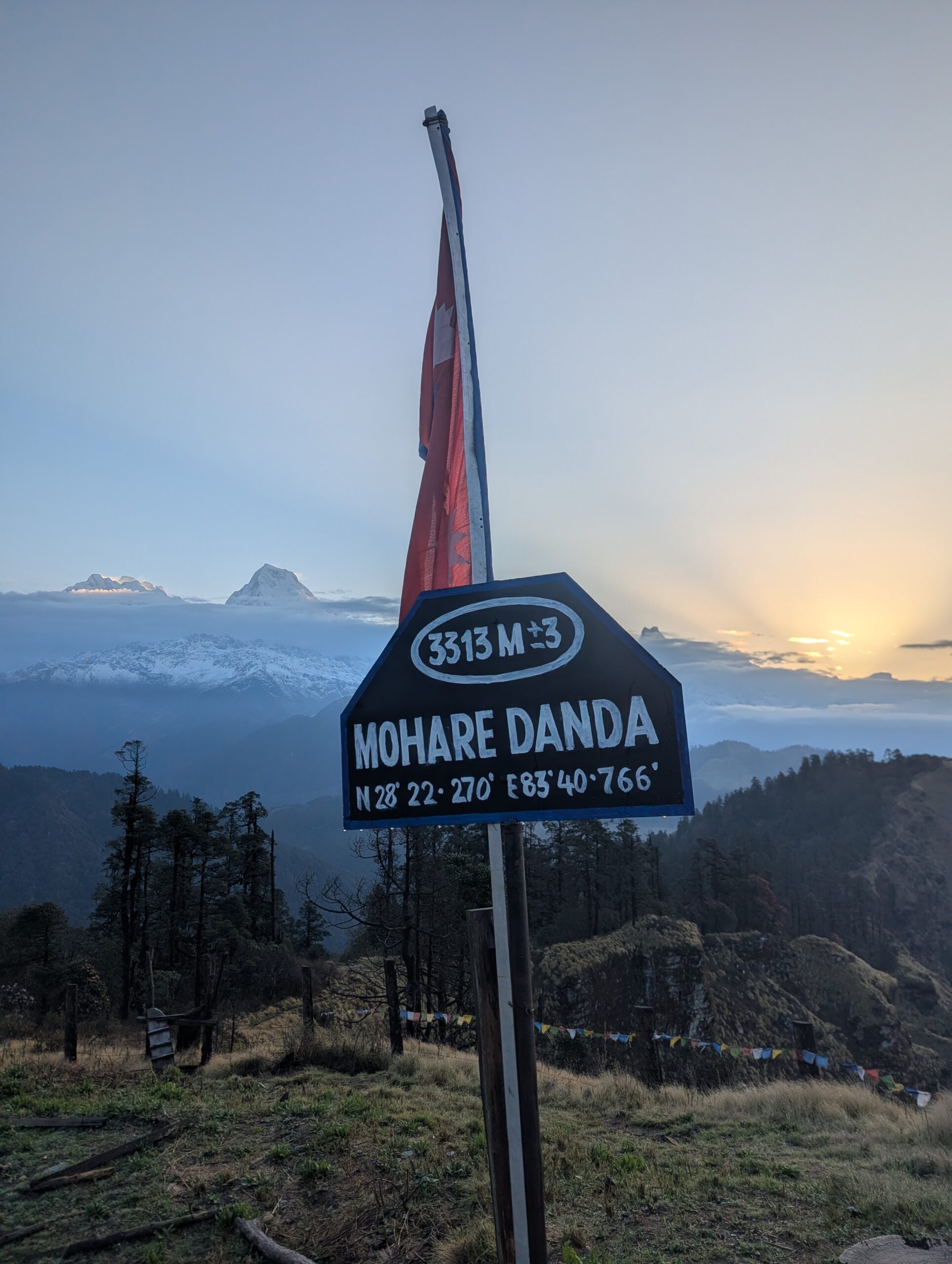
The reward at the top: Dhaulagiri filling the skyline from Mohare Danda
“Mohare Danda and Poon Hill look out at the same mountains — but from Mohare, you might just have the whole ridge to yourself.”
3,300m, facing the Dhaulagiri massif
A forest walk built for wandering, not rushing
The descent from Mohare Danda toward Nangi is, by consensus among everyone who has walked it, the loveliest stretch of the entire trek. The trail drops gently through more rhododendron forest, oak groves, and open ridge sections with the Annapurna – Dhaulagiri panorama trailing along in the background for company.
It’s also prime birdwatching territory — sunbirds, laughingthrushes, and the occasional Himalayan monal make an appearance for anyone willing to walk slowly and keep their binoculars handy.

The trail from Mohare Danda to Nangi, threading through rhododendron and oak forest
A village that runs on its own quiet momentum
Nangi is the kind of place that makes this trek worth doing on its own terms, not just as a shorter alternative to somewhere else. Terraced fields, prayer flags strung between rooftops, and a village school that put Nangi on the map long before trekkers started arriving — this is rural Annapurna, largely unbothered by tourism.

Nangi village, terraced into the hillside below Mohare Danda

Slow trails and thick canopy — ideal territory for birdwatchers. Photo credits: Madhuri Isukapally

Home for the night: a Tamang-run community guesthouse in Nangi
The guesthouses here are run directly by the local Tamang community, part of a wider push to keep tourism money in the villages the trail passes through rather than routing it elsewhere. Dinner is whatever the kitchen garden allows that week, the rooms are simple, and the welcome is entirely unstaged. It’s easily the most memorable night’s stay of the trip — not for the amenities, but for the company.
The trail from Nangi to Bans Kharka where you meet the road again winds through a few picturesque villages and more oak and rhododendron forests. Each turn is an opportunity to admire the Annapurna giants from a different angle!

Mohare Danda is waiting — and it’s quieter than you think
If two Himalayan sunrises, a walk through blooming rhododendron forest, and a night in a community-run guesthouse sound like your kind of trip, we’d love to plan it for you.