






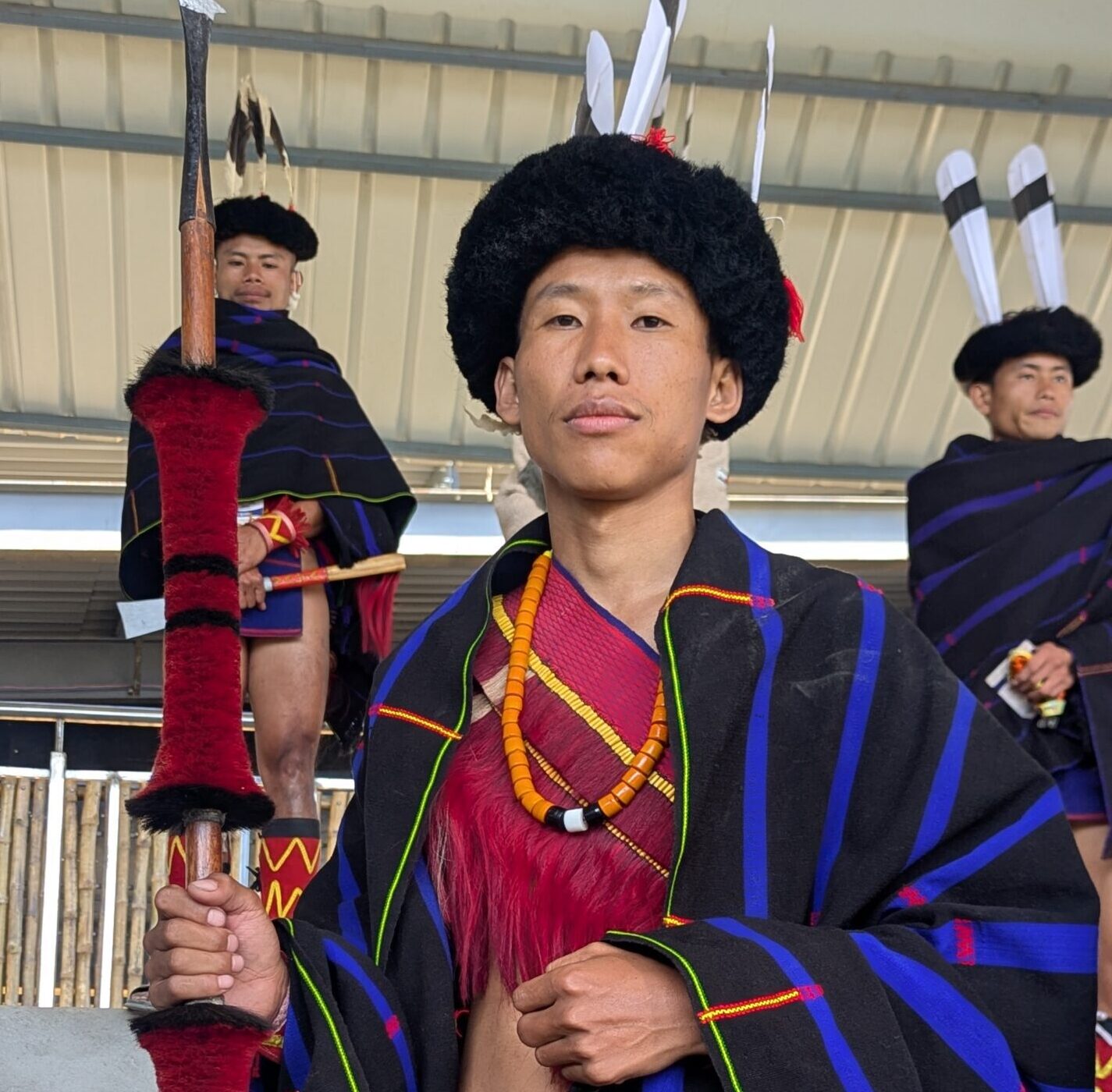
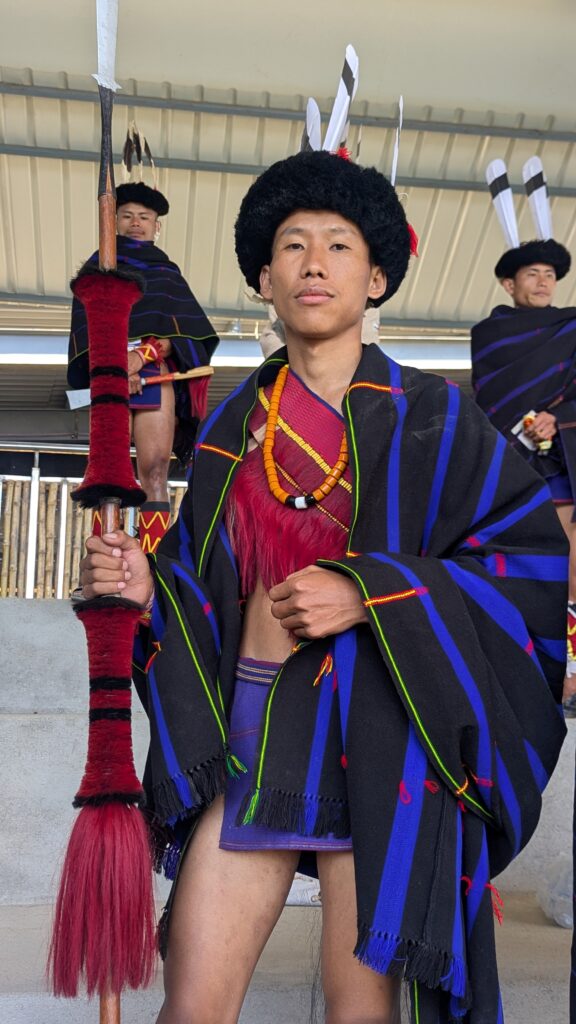
Every December, thousands of visitors descend on Kisama Heritage Village, Nagaland for the Hornbill Festival – a riot of colours, music, dance, food and traditional crafts. For many travellers, it is their first introduction to Naga culture. But there is much more to the festival than the spectacular performances you get to witness..
Here are seven things you may not know about Nagaland’s most famous festival.

1. The Hornbill Festival is not an ancient one
Despite its strong association with Naga traditions, the Hornbill Festival itself isn’t an ancient festival. It was first organised in 2000 by the Government of Nagaland as a way of bringing the state’s diverse tribal cultures together on one platform and showcasing their traditions to the outside world.
The festival has since grown into one of India’s best-known cultural festivals.
2. There isn’t one “Naga culture”
This is perhaps the most important thing to understand about the festival.
Nagaland is home to 17 main tribes and numerous others, each with their own languages, traditional dress, customs, songs, dances and festivals. The Hornbill Festival provides a rare opportunity to experience this diversity in one place. What looks like a single festival is actually a coming together of many distinct cultures.
3. The festival is named after the bird, Hornbill
The Great Hornbill has an important place in Naga culture and folklore. Its feathers have traditionally been used in ceremonial attire, and the bird appears in stories and symbolism across the region. The hornbill therefore became a fitting symbol for a festival celebrating Naga heritage.
4. Kisama isn’t an ancient Naga village. Even its name is a combination!
The spectacular Kisama Heritage Village, where the main festival takes place, is a purpose-built cultural venue. Its traditional-style structures represent the main Naga tribes and their distinctive architectural traditions. So while the setting looks like an old Naga village, Kisama was created specifically as a space where these cultures could be showcased and celebrated. The name Kisama is a blend of the names of the neighbouring villages – Kigwema and Phesama!
5. The performances aren’t just for entertainment
Traditional dances and songs performed during the festival often have deeper connections to Naga history and community life. They can celebrate harvests, recount stories, express courage and solidarity, or mark important occasions. For visitors, it can be tempting to see them simply as colourful performances. But behind the costumes and choreography are traditions that have been passed down through generations.
6. The festival isn’t only about traditional culture
-C88qYvkI.jpg)
Walk around Kisama and you’ll quickly discover that contemporary Nagaland is very much part of the story too. Alongside traditional performances and crafts, you will find modern music, rock bands, food, fashion, art and young Nagas expressing their own identity. This mix of old and new is one of the most interesting aspects of the festival. Nagaland isn’t putting its culture behind glass. It is constantly evolving.
7. The best part may happen away from the main stage
The main performances at Kisama are spectacular, but the festival becomes much more interesting when you venture beyond the headline events. Talk to artisans. Try Naga food. Visit villages. Meet local hosts. Listen to stories. The festival can be an introduction to Nagaland, but the villages and communities beyond Kisama are where you begin to understand the culture more deeply.
More than a festival
The Hornbill Festival is sometimes described as the “Festival of Festivals”. And while the spectacle is certainly impressive, its deeper significance lies in bringing Nagaland’s many communities together to celebrate and share their heritage.
For travellers, it offers something even more valuable: an invitation to look beyond the colourful costumes and performances and discover the people, stories and traditions behind them. And that is perhaps the best way to experience Nagaland – not simply as a spectator, but as a curious traveller willing to listen, learn and engage.
Would you like to experience the Hornbill Festival? Tell us in the comments, or get in touch with Outdoers to explore our Hornbill Festival journeys.