


Trip Advisor
-
 An experience worth having - An experience that should not be missed is how I would describe what I felt. The way the team makes you feel at home, very aware of how each member... read more

 Ramesh V
October 19, 2026


Treks


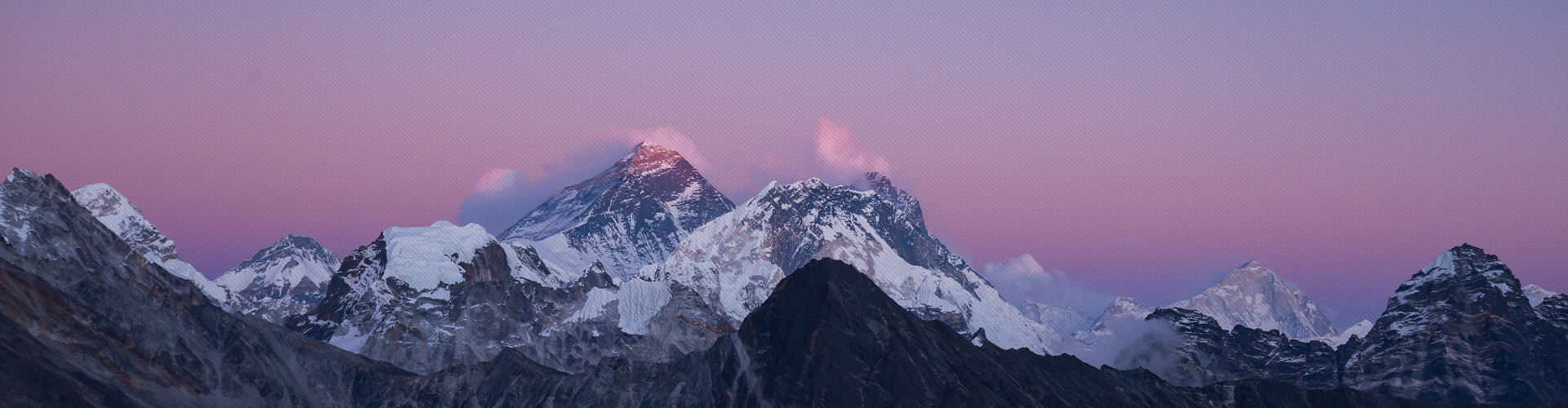
Outdoers organise guided treks across India, Nepal and Bhutan, from easy 2-3 day trails to demanding 10-13 day expeditions. Choose from the Himalaya in Uttarakhand, Himachal, Ladakh, Kashmir and Sikkim, the forests and highlands of the Northeast, and lesser-known routes in South India and the Andamans. Every trek is graded Easy, Moderate, Moderate+ or Demanding, so you can filter by region, difficulty, duration and month and find the right fit, whether you're a first-time trekker, a family or a school group.


FAQ
1. Which treks are best for a first-time trekker?
Treks such as the Dhampus-Pothana Trek in Nepal, Binsar Sanctuary Trek are a couple of easy treks that are best for a first-time trekker. These are low-altitude highly-rewarding treks that are perfect introduction to trekking in the Himalayas. While they are considered moderate treks, Pindari Glacier Trek and Chopta-Tunaganth-Chandrashila and a few others too can be done by reasonably fit first-timers. Use the filter at track page to view all the easy treks that are suited for first-timers.
2. How are Outdoers treks graded, and how fit do I need to be?
We grade every trek as Easy, Moderate, Moderate+ or Demanding, so you can pick one that matches your experience and fitness. Each trek page lists its daily walking time, distance and highest altitude.
Easy: Easy treks involve about 3-5 hours of walking a day, usually up to 8 km, on gentle trails with few steep sections and mostly below 3,000 m. No trekking experience is needed. If you can walk 5 km comfortably in about an hour and climb a few flights of stairs without stopping, you are ready for an Easy trek.
Moderate: Moderate treks may involve about 4-6 hours of walking a day, usually 8-12 km, with sustained ascents and descents on uneven paths, mostly below 3,500 m. They suit people who stay active through walking, cycling or swimming two or three times a week. A good benchmark is being able to walk 8-10 km with a few breaks, or hike for 3-4 hours on hilly ground.
Moderate+: Moderate+ treks may involve about 5-7 hours of walking a day, usually 10-14 km, with long climbs, rocky or exposed sections and some days above 3,500 m. You should be able to complete a 10-12 km hike with elevation gain, and we recommend 4-6 weeks of regular cardio training beforehand. Some previous trekking experience is helpful.
Demanding: Demanding treks may involve 6-9 hours of walking a day, often 12 km or more, on steep, remote terrain, with high passes that can cross 4,000-5,000 m and basic camping. They suit experienced, well-prepared trekkers who can hike for several hours with a loaded daypack, and we recommend at least 8 weeks of training. Previous multi-day or high-altitude trekking is strongly advised.
3. Which regions does Outdoers trek in?
We currently offer treks in Uttarakhand, Himachal, Ladakh, Kashmir, Sikkim, the Northeast (Nagaland, Arunachal, Meghalaya, Assam), South India, the Andamans. We also offer treks in Nepal, Bhutan and Sri Lanka.
4. What is the best time of year to trek in India?
There is no single best season, because India's regions peak at different times, so there is a good trek in every month of the year. The Himalaya is at its best in spring (March to June) and autumn (September to November), the Northeast is best in the dry months from October to April, and South India's Western Ghats and the Andamans are best from October to March and November to May, respectively.
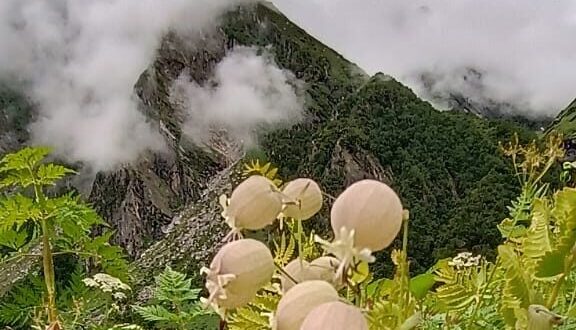
Himalaya (Uttarakhand, Himachal, Sikkim, Ladakh, Kashmir): Spring brings clear skies, flowering rhododendrons and mild trails, and autumn offers clear mountain views after the rains. The high-altitude regions follow their own calendar: Ladakh opens up from June to September, and the Kashmir Great Lakes trek runs from July to September, when the high meadows are in bloom. The monsoon months of July and August are the season for the Valley of Flowers in Uttarakhand. In winter, from December to February, lower-altitude snow treks in Uttarakhand and Himachal are a good option.
Northeast (Nagaland, Arunachal Pradesh, Meghalaya, Assam): The best window is October to April, when the weather is dry, skies are clear and forest trails are comfortable. December is especially popular in Nagaland for the Hornbill Festival, and winter is the time for the rainforests and festivals of Arunachal. The monsoon (June to September) brings very heavy rain to the region, so we recommend planning around it.
South India and the Andamans: The Western Ghats are at their best from October to February, with cool mornings, clear views and dry trails. The monsoon turns the hills lush and green from June to September, but trails can be wet and leeches are common, so it suits seasoned trekkers who enjoy that. The Andamans are best from November to April, when seas are calm and skies are clear.
In January and February, head to the Northeast, South India, the Andamans or low-altitude Himalayan snow trails.
March and April bring spring to the Himalaya and Sikkim.
In May and June, the higher Himalaya and Ladakh open up. July and August are for the Valley of Flowers, Kashmir and Ladakh.
September and October bring clear autumn Himalaya as the Northeast and South India begin their seasons.
November and December suit the Northeast, South India and the Andamans, with snow treks starting in the Himalaya. Use the month filter on this page to see what's running when.
5. How long do treks last and what do they cost?
Durations on the page run from 3 days or less to 10-13 days. Our group trips typically assume a group size of 8, and their prices range anywhere from ₹15000 to ₹70000. Visit individual trek pages to view the latest prices.
6. What is included in the trek price, and what isn't?
Our prices usually include the following:
comfortable stay (including at the base, and on the trail)
All meals during the trek,
guide,
some experiences
permits,
local transport
And exclude the following:
flights to/from the starting point of the trip,
insurance,
personal gear
Tips and gratuities
7. Are Outdoers treks suitable for families and school groups?
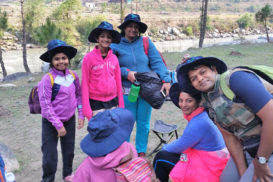
Yes. Family-friendly treks and school trips are a core part of what we do. We offer Easy-graded treks with short walking days, gentle trails and comfortable stays. Treks such as Dhampus-Pothana Trek in Nepal and Binsar Sanctuary Trek can be done be children as young as 7 years.
For school groups, we plan the route, pace, activities and group size around the age and fitness of the students, with trained guides and teachers or parents walking with them.
Every trek page shows its grade, daily walking time and highest altitude, so you can choose one that fits your family or class. Tell us the children's ages and your preferred dates, and we will suggest the right trek or build a custom itinerary.
8. What if your fixed-departure dates don't suit me? Can you organise a custom trek?
Yes. We can organise a custom trek on dates that work for you, for a family, a group of friends, a school or a company. Tell us which trek interests you, how many people are joining and how many days you have, and we will send you a quote. If you aren't sure which trek to choose, share your group's ages and experience, and we will suggest one that fits.
9. How do you handle safety and altitude?
Our guides are qualified wilderness first aid responders. We plan every itinerary with gradual height gain and proper acclimatisation, carry first-aid keep an emergency evacuation plan for each trek.
For high-altitude treks, we also carry oxygen kits. We recommend all guests take medical insurance that covers trekking and high-altitude evacuation, and to tell us about any medical conditions before booking.
10 Do I need permits or visas, and who arranges them?
We arrange all trekking permits for you, including Inner Line Permits for parts of the Northeast. Visas are your responsibility and can usually be obtained online or on arrival, depending on your nationality. We'll guide you on the process, and we recommend checking the rules for your passport well in advance.