


Trip Advisor
-
 An experience worth having - An experience that should not be missed is how I would describe what I felt. The way the team makes you feel at home, very aware of how each member... read more

 Ramesh V
October 19, 2026


Western Bhutan Cultural Tour
Western Bhutan Cultural Tour

Description
Upcoming Fixed-Departure Trips:
A trip to the last Shangri-la is a must on any serious travel buff’s bucket list. This beautiful Himalayan kingdom that was hitherto inaccessible to the outside world opened its doors to low-impact, high-value tourism not too long ago. Bhutan fiercely guards its ancient cultural heritage, religion, traditional arts and crafts and natural heritage.
You are transported into a different land, in a different era, the moment you land in the Land of the Thunder Dragon, as Bhutan is called. Here is a country that values Gross National Happiness (GNH) over GDP. There is so much to pack into a trip to Bhutan! Lovely treks in the lap of the Himalayas, Buddhist monasteries and goembas, interesting museums, festivals, wildlife sanctuaries and much more.
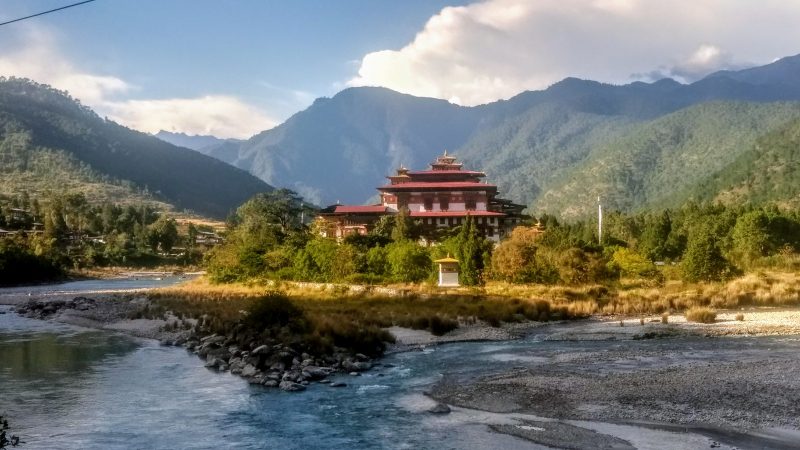
Discover Gross Personal Happiness on this 7 days/6 nights trip in West Bhutan! Apart from the best of the sights in Thimphu and Paro, you will also visit Punakha to glimpse the majestic dzong there and the Divine Madman’s temple. You will also venture further eastward to Gangtey in Phobjika valley, a charming pastoral region.
Itinerary
Inclusions
Ground transport from Bagdogra onwards, 6 nights in 3-star hotels, food, entry fees to some monuments, guiding charges.
Gallery


FAQ
1. What is the Western Bhutan Cultural Tour?
It is a 7-day, 6-night guided journey through Western Bhutan, from the border town of Phuentsholing to Thimphu, Gangtey, Punakha and Paro. You visit dzongs, monasteries and museums, cross the Dochu La pass, walk the nature trail in the Phobjika Valley and climb to Tiger’s Nest. Groups are small, with a maximum of 12 guests.
2. How much does the Western Bhutan Cultural Tour cost, and what is included?
The price covers ground transport from Bagdogra onwards, six nights in 3-star hotels, breakfast and dinner, entry fees to monuments, permits and guiding charges. Prices can change with season and group size, so please check the latest price per person on the Western Bhutan Cultural Tour page or write to hello@outdoers.in.
3. What is not included?
Flights to Bagdogra and from Paro, Sustainable Development Fee, travel insurance, tips, shopping and personal expenses are not included.
4. What are the entry requirements for Indian travellers?
Indian citizens don’t need a visa to visit Bhutan, but they need an entry permit, and must pay Bhutan’s Sustainable Development Fee, currently ₹1,200 per person per night. Children aged 6 to 12 pay a reduced rate, and younger children are exempt. You will need a valid passport or Voter ID, and since this itinerary goes beyond Thimphu and Paro to Punakha and Gangtey, a route permit is also required. Rules and fees can change, so please check the Tourism Council of Bhutan or the Department of Immigration before you travel.
We arrange your entry permit and the route permit this itinerary needs, and both are included in the price. The Sustainable Development Fee is not included.” At ₹1,200 a night, six nights it comes to ₹7,200 per adult.
5. What if I am not an Indian citizen?
Most other nationalities need a visa arranged through us, and pay a Sustainable Development Fee, which is currently USD 100 per person per night.
6. How difficult is the Western Bhutan Cultural Tour?
It is an easy to moderate trip. Most days are spent driving and sightseeing on gentle walks, with a short nature trail in Phobjika Valley on Day 3. The one demanding day is Day 6, when the stiff climb to Tiger’s Nest takes about 2.5 hours.
7. Is altitude sickness a concern in Bhutan?
The altitude is moderate, and the itinerary climbs gradually from the plains to Thimphu, Dochu La and Paro. The highest point is Dochu La at 3150 m. Most travellers manage well. Drink plenty of water, go slowly on the Tiger’s Nest climb and tell your guide if you feel unwell. If you have a medical condition, check with your doctor before booking.
8. What is the best time to visit Western Bhutan?
The best months are March to May and September to December. Spring brings mild days and flowering forests, while autumn brings clear mountain views. Winter is cold, and the monsoon months of June to August bring heavy rain. Timing your trip with one of the festivals (tshechu) will make it an even more memorable experience. Paro tshechu is from 18th to 22nd March 2027 and Thimphu tshechu from 10th to 12th October 2027. Other festivals that happen during the other months as well.
9. Where does the tour start and end, and how do I get there?
It starts at Bagdogra airport (Siliguri) in West Bengal. Try to arrive by 2 pm on Day 1, and you will drive about 3 to 4 hours to Phuentsholing, on the Bhutanese side of the border. On Day 7 you fly out of Paro.
10. What will we see and do on the tour?
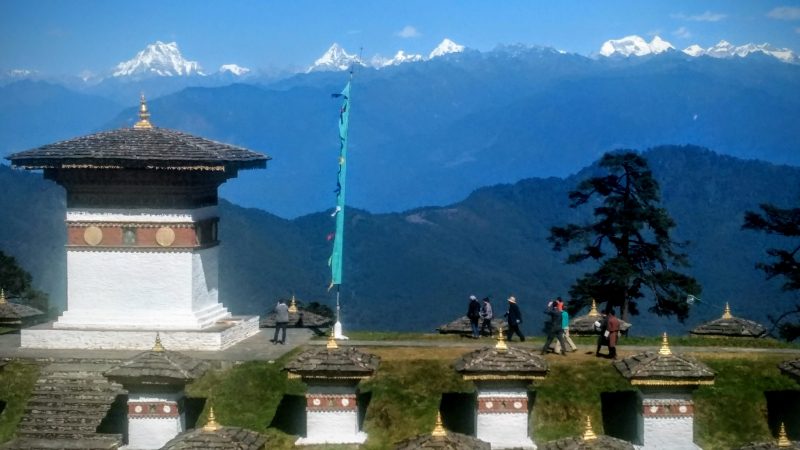
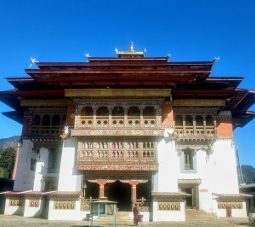
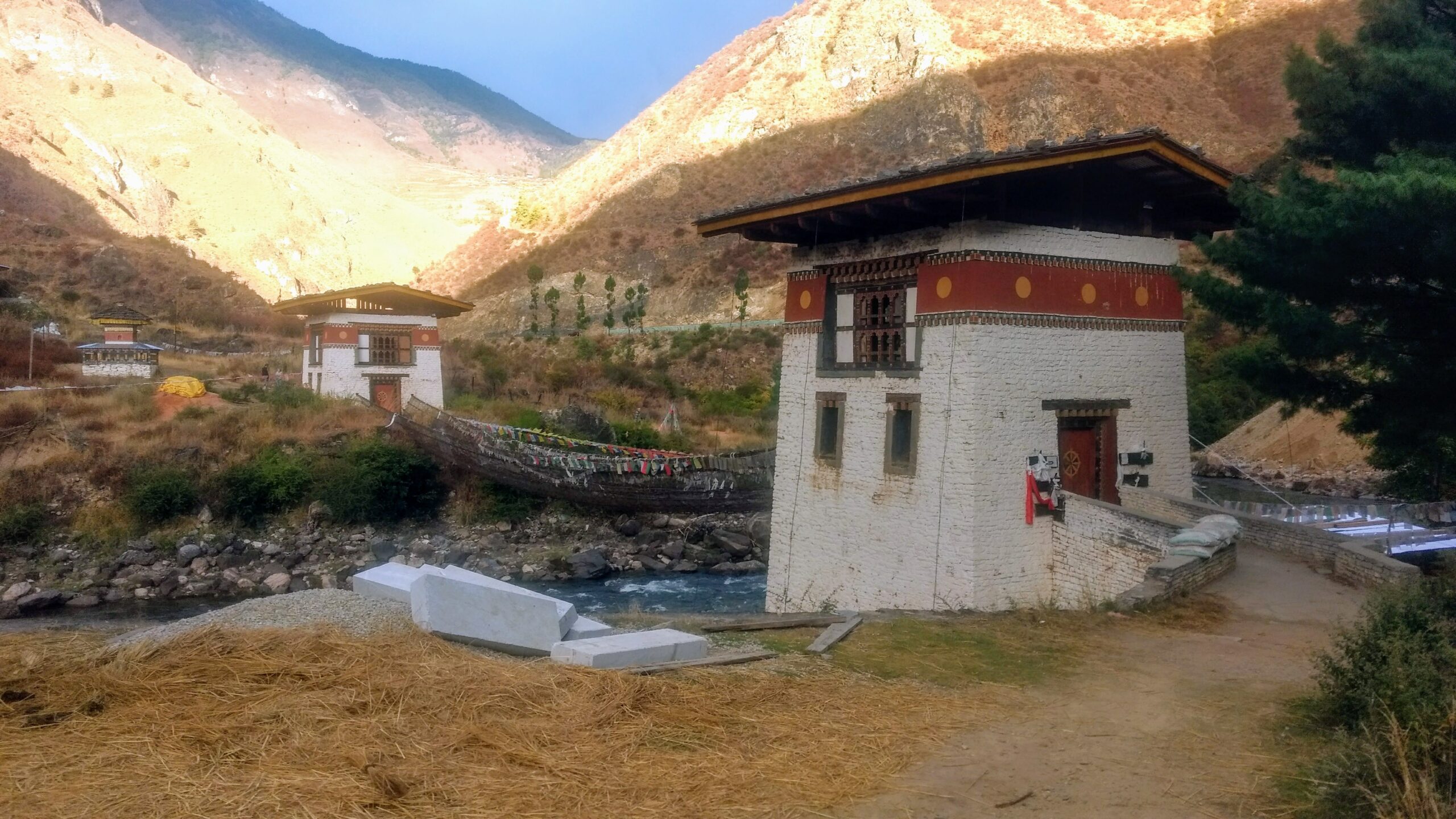
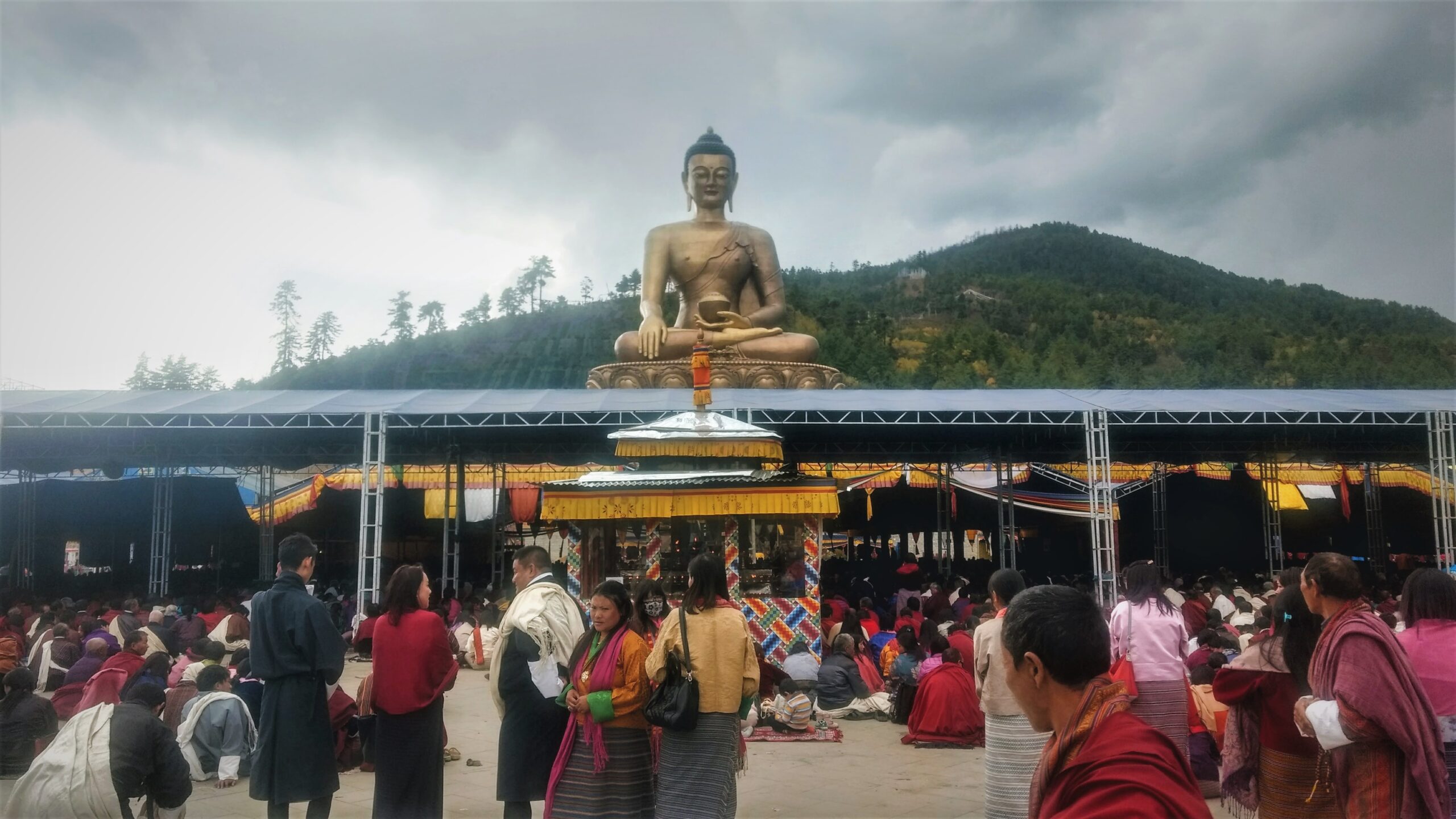
You will see Thimphu’s giant golden Buddha statue and folk heritage and textile museums, and stop at Dochu La with its 108 chortens. You will visit Gangtey Monastery and walk the Phobjika Valley nature trail, then see Punakha Dzong and Chimi Lakhang, the temple of the Divine Madman. In Paro you will see the Tachogang iron chain bridge, Paro Dzong, the national museum and Kyichu Lakhang. The highlight is the hike to Tiger’s Nest.
11. How hard is the hike to Tiger’s Nest?
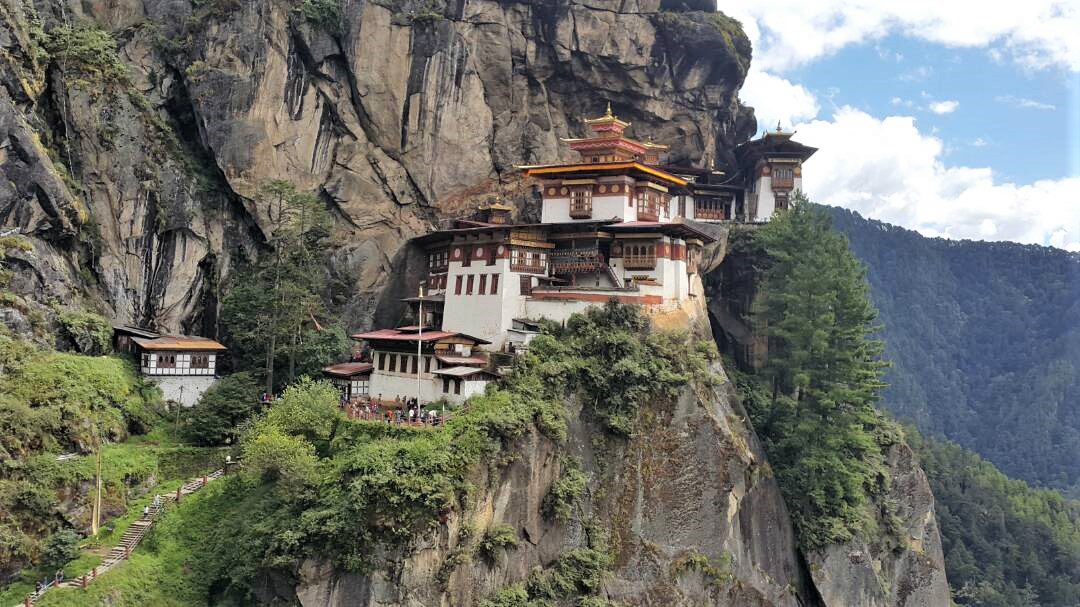
Tiger’s Nest is a monastery perched on a cliff above the Paro Valley. The trail starts about 30 minutes from Paro and the climb takes around 2.5 hours, so it is steep and steady rather than technical. Go at your own pace and carry water. Photography is not allowed inside the monastery, and bags and cameras usually have to be left at the entrance.
12. What are Gangtey and the Phobjika Valley like?
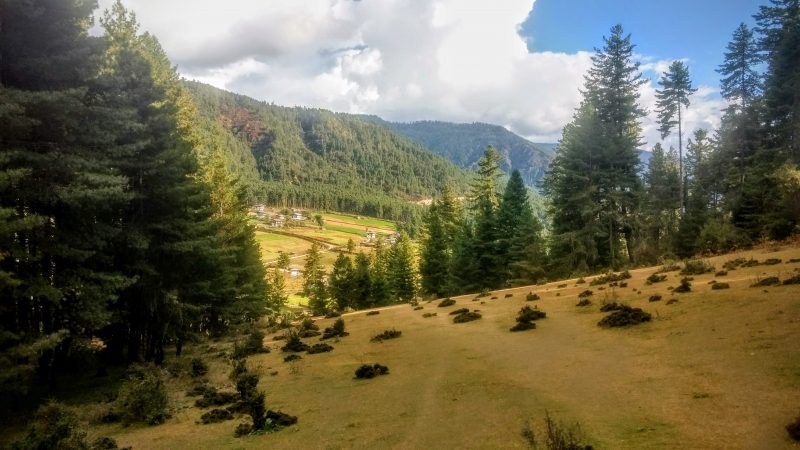
Gangtey is a quiet village above Phobjika, a broad glacial valley and wetland conservation area. The nature trail connects the monastery to the wetlands. From around November, endangered black-necked cranes arrive here for the winter.
13. Where do we stay?
You stay six nights in 3-star hotels across Phuentsholing, Thimphu, Gangtey, Punakha and Paro (2 nights).
14. Are meals included, and can dietary needs be met?
Breakfast and dinner are included. Bhutanese cooking is known for chilli and cheese, as in the national dish ema datshi, and menus usually have milder options too. Vegetarian, Jain and vegan options can be arranged.
15. What should I wear when visiting dzongs and temples?
Dress modestly, with shoulders and knees covered, and remove hats and sunglasses at religious sites. Shoes come off before entering temples, and photography inside temples is usually not allowed. Your guide will brief you at each stop.
16. What will the weather be like?
It depends on altitude and season. Phuentsholing and the low valleys are warm and humid, while Thimphu, Dochu La, Gangtey and Paro are cooler, and evenings can be cold at any time of year. Pack layers and a rain jacket.
17. What is the minimum age for the Western Bhutan Cultural Tour?
The recommended minimum age is 10 years. Children should be comfortable with long car journeys and a steep climb of a few hours.
18. How should I prepare?
Walk briskly at least 3 km, three to four times a week, preferably on hilly terrain, and climb stairs for at least 15 minutes every day in the weeks before you travel. This is mainly to prepare for the Tiger’s Nest climb.
19. Do I need trekking shoes, or can I wear sports shoes?
Sports shoes with good grip are fine for most of the tour, but trekking shoes are recommended for Tiger’s Nest and the Phobjika nature trail. Break in new shoes before you travel.
20. What should I pack?
Pack layered clothing, a warm jacket, a rain jacket, a hat, sunscreen, comfortable walking shoes, modest clothing for temple visits and a refillable water bottle. Also carry your passport, permit documents and a power bank. We send a detailed checklist when you register.
21. What currency should I carry? Do ATMs and cards work?
The Bhutanese ngultrum is pegged to the Indian rupee at 1:1, and Indian rupees are widely accepted in Bhutan. Cards work in larger hotels and shops, but carry cash for small purchases and tips. ATMs are available in Paro and Thimphu.
22. How is mobile connectivity?
Mobile signal is good in towns such as Thimphu, Paro and Punakha and can be patchy in valleys and on mountain roads. All hotels have Wi-Fi. Make sure you subscribe to international roaming for the duration of the trip. Alternatively, you can purchase a Bhutan SIM at either Phuentsholing or Thimphu.
23. Is the water safe to drink?
Hotels provide drinking water. We recommend drinking bottled or purified water.
24. Is the tour safe?
Yes. Experienced guides lead the tour, and the team has an emergency plan. The main things to watch are long drives on winding mountain roads, steep steps on the Tiger’s Nest trail and the cold at higher altitudes. Travel insurance is recommended.
25. What is the group size, and can I book a private group or custom dates?
The maximum group size is 12. Outdoers also arranges this tour on your preferred dates, with the quote based on group size and the number of days. Email hello@outdoers.in or call +91-82799-29473.
